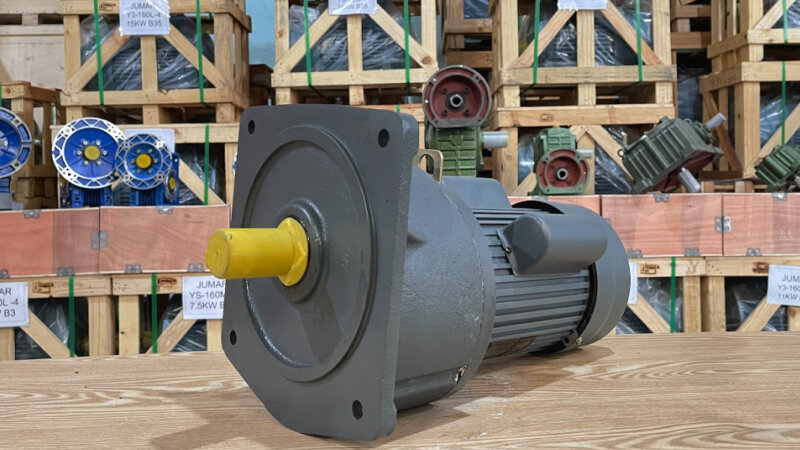
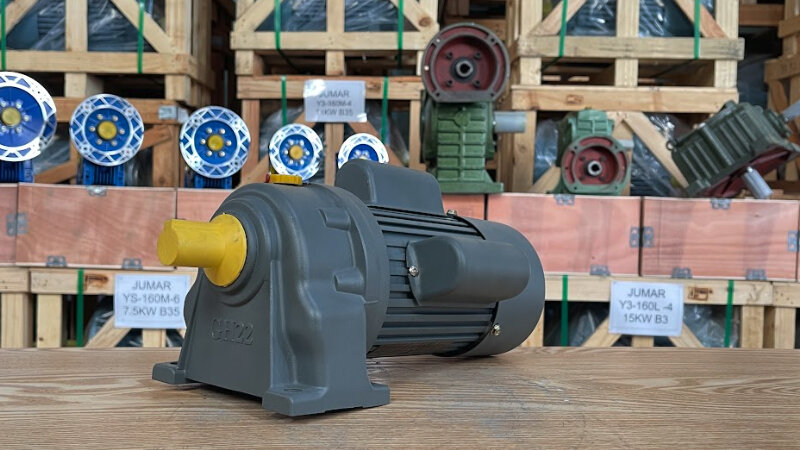
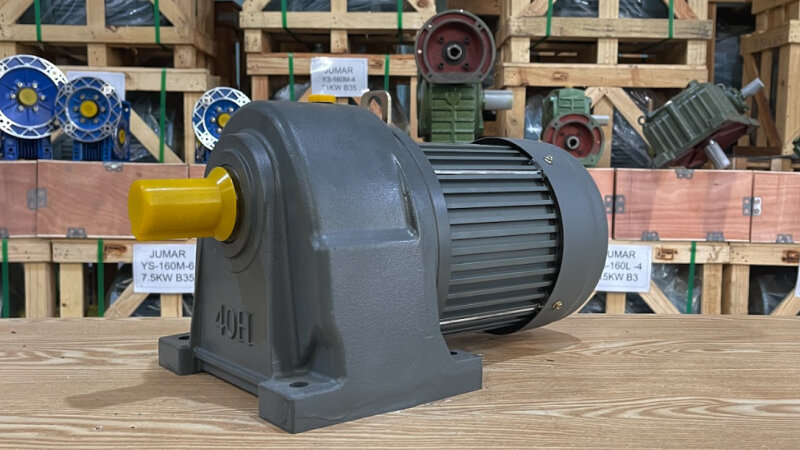
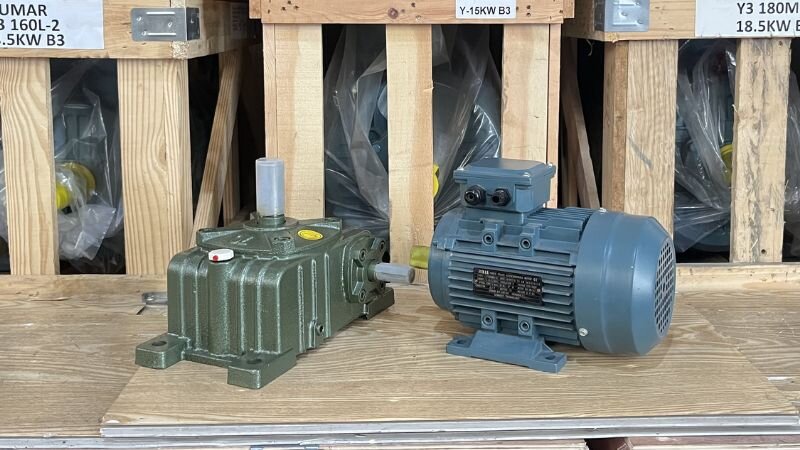
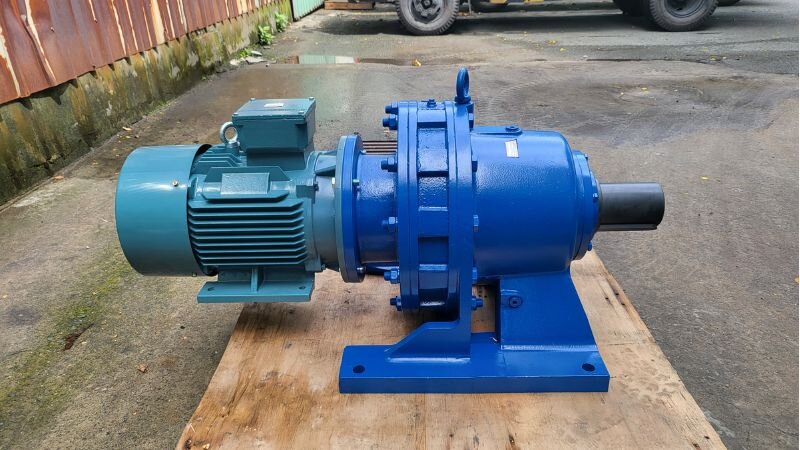
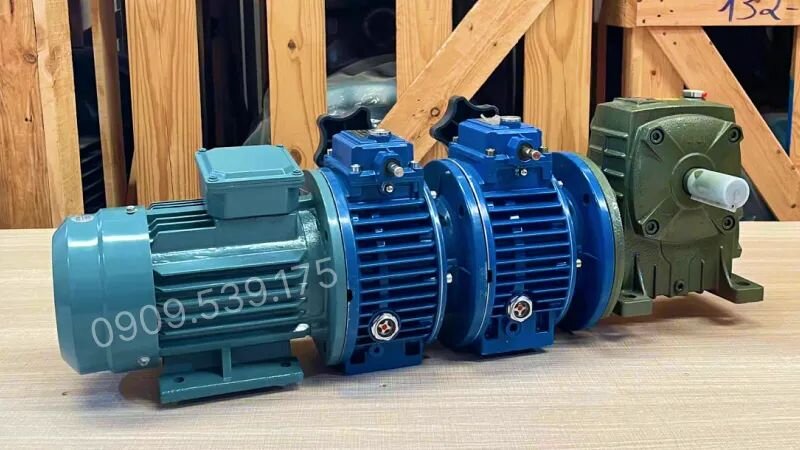
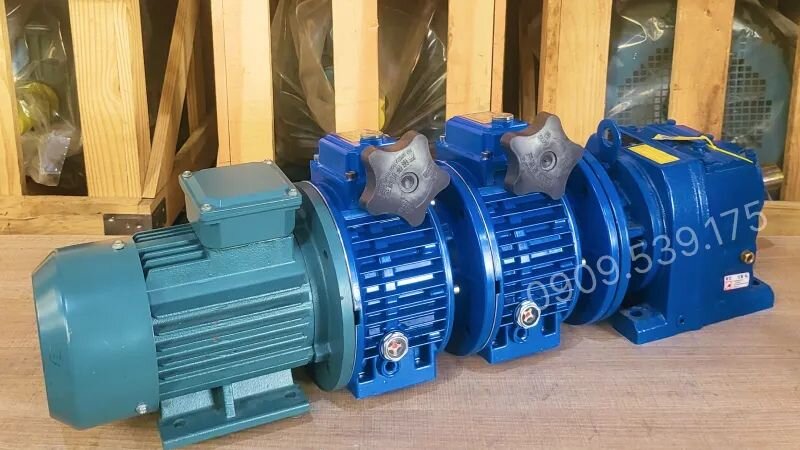
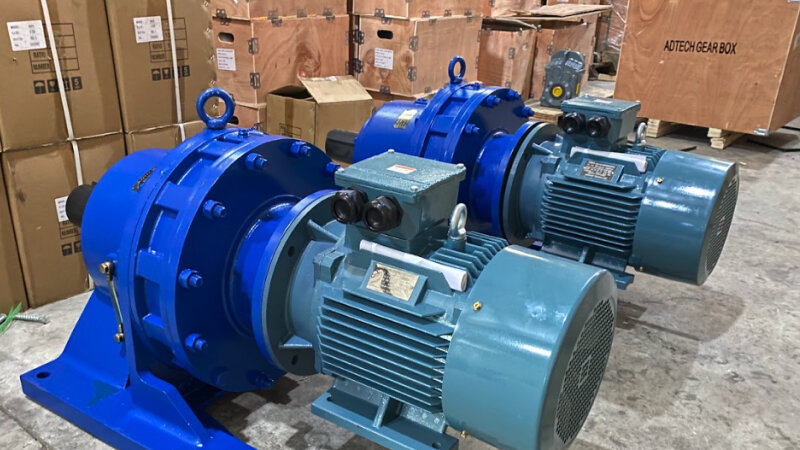
Gear Motors, also known as Geared Motors or Reduction Motors, are electromechanical devices that combine an electric motor and a gearbox. The main function is to reduce the rotation speed and increase the output torque. This helps Gear Motors become an indispensable part of many industrial systems and equipment.
What are Gear Motors?
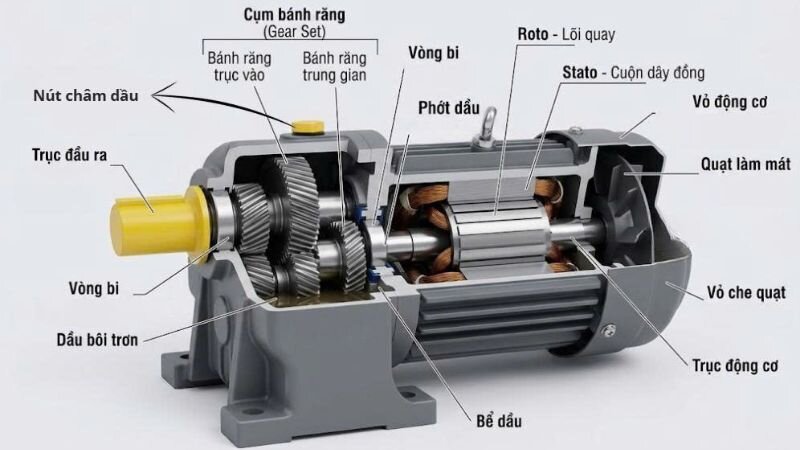
Construction of Gear Motors
Basic Gear Motors consist of two main components:
Electric Motors: This is the main energy source for the entire system. Electric motors can be 1-Phase Electric Motors (220V) or 3-Phase Electric Motors (380V/660V), depending on the power requirements and specific applications.
Gearboxes: This is the important part that helps reduce the rotation speed from the motor and increase torque. The gearbox usually includes gears, worm shafts, or other transmission mechanisms.
Construction of Gear Motors
Operating Principle of Gear Motors
The operating principle of Gear Motors is based on the combination of an electric motor and a gearbox. The electric motor creates rotational motion, which is then transmitted to the gearbox. Here, the rotation speed decreases, while the torque increases.
The transmission mechanism in the gearbox usually includes gears that mesh directly with each other. The gear ratio between the gears determines the level of speed reduction and torque increase. For example, if the gear ratio is 1:10, the rotation speed will decrease by 10 times, while the torque will increase by 10 times (theoretically).
Classification of Gear Motors
Gear Motors are divided into many types based on the power source used and product features, suitable for different operational needs.
By power source used
1 phase gear motors
1 phase gear motors 2.2kW
1 phase gear motors use a single-phase 220V power source, suitable for residential and small industrial applications.
3 phase gear motors
3 phase gear motors 2.2kW
3 phase gear motors use a three-phase 380V or 660V power source, suitable for large industrial applications requiring high power.
By product type
Mini gear motors
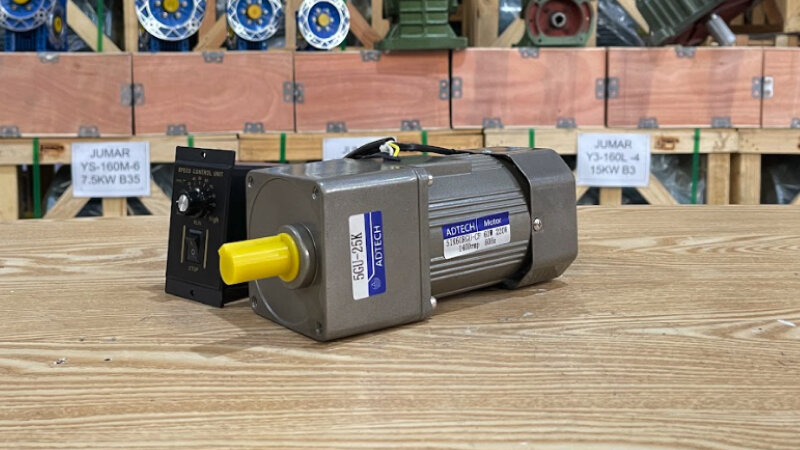
Mini gear motors 60W
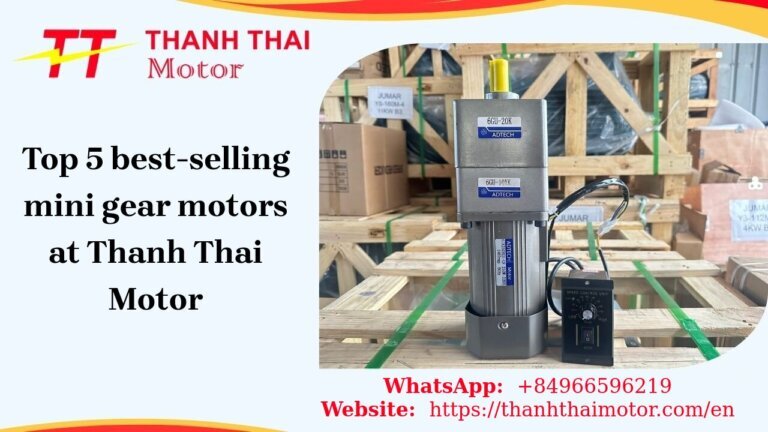
Mini gear motors: This type has a compact size and low power, suitable for small applications such as office machinery and household appliances.
Heavy duty gear motors
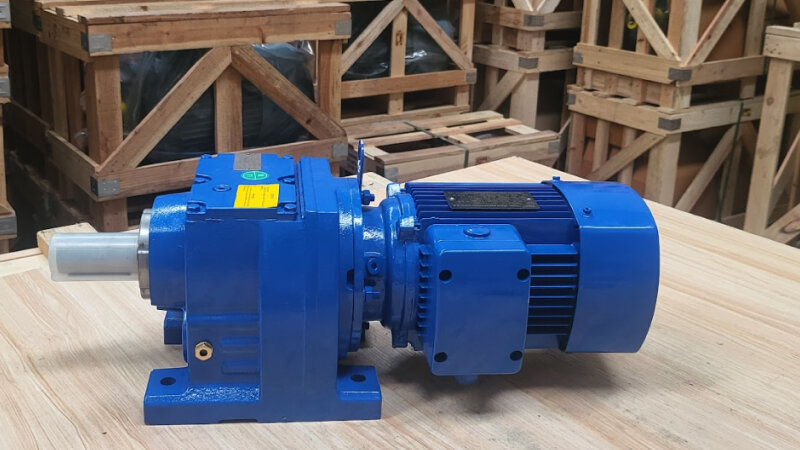
Heavy duty gear motors R-Series Inline Helical Gearbox
Heavy duty gear motors: This type has a large size and high power, suitable for heavy industrial applications such as production machinery, conveyors, and lifting equipment.
Gear motors with brake
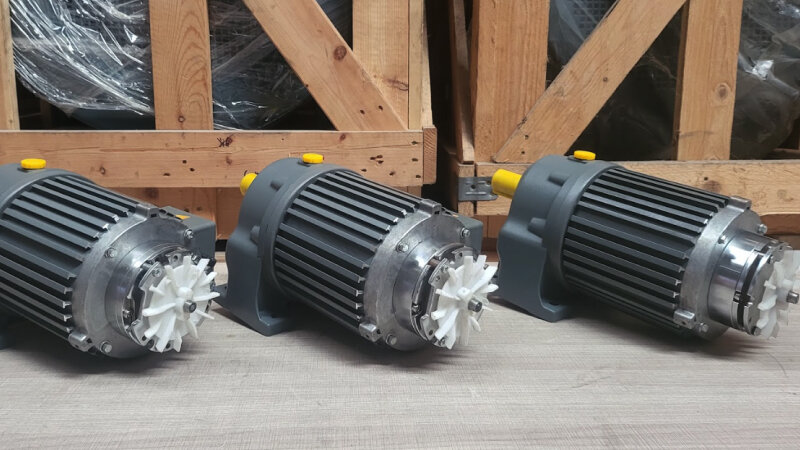
3-phase gear motors with brake 0.4kW
Gear motors with brake: This is a type equipped with an electromagnetic brake system, specifically designed for use in systems that need to stop motion.
NMRV gear motors
NMRV gear motors are a hollow shaft gearbox series, featuring a lightweight aluminum housing and compact design. They are suitable for tight installation spaces and light-duty applications such as food conveyors and packaging machines.
Hollow shaft gear motor series with lightweight aluminum housing and compact design
Worm Gear Motors
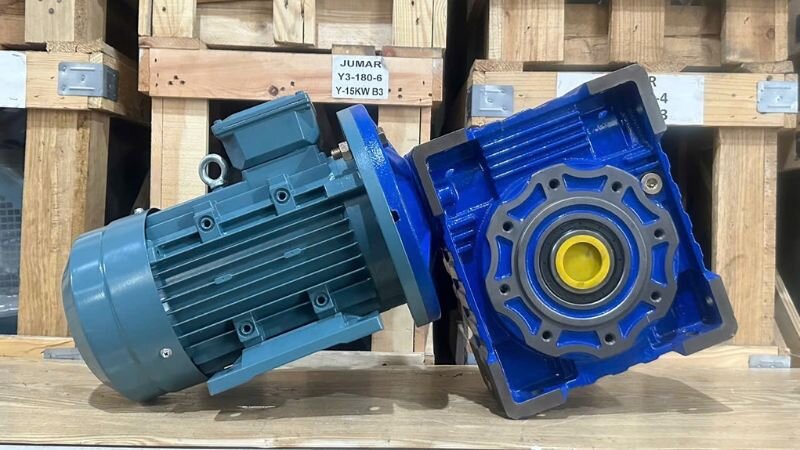
These Worm Gear Motors are famous for their anti-slip capability when stopped, often featuring an output shaft design perpendicular to the input shaft. The machine runs smoothly with high durability, specialized for freight elevators or agitators.
Worm gear motors with output shaft design perpendicular to the input shaft
Cycloid gear motors
Instead of using conventional gears, Cycloid gear motors use rollers and wave-shaped gear discs to withstand large impact forces. This is the number 1 choice for machinery requiring high torque such as sludge presses and stone mining machines.
Cycloid gear motors are the top choice for machinery requiring high torque
Variable Speed Gear Motors
The special feature of the combination between Gear Motors and a Mechanical Speed Variator is the handwheel component on top to adjust the speed directly by hand within a certain range. Variable Speed Gear Motors are very convenient for production lines that need flexible speed changes without using electronic inverters.
This series is a perfect combination of Gear Motors and Mechanical Speed Variators
Heavy Duty R-Series Inline Helical Gear Motors
Heavy Duty R-Series Inline Helical Gear Motors are a powerful series among reduction units with a concentric output shaft (inline) design and thick steel gear sets. They are specialized for heavy tasks such as crane systems, coal conveyors, and steel production lines.
Heavy Duty R-Series Inline Helical Gear Motors specialized for heavy tasks
Price list for Gear Motors in 10/2026 at Thanh Thai Motor
Price list for 1 phase gear motors
The selling price of this series is calculated based on the quality of components such as copper wire, capacitors, and the cooling system. Customers can choose different price segments depending on continuous or short-term usage needs.
The price list is categorized in detail by kW power. Factors such as protection level and energy efficiency will determine the cost difference in the price table.
The complete set cost usually includes both the motor and the speed control box. The price will change flexibly depending on the gear ratio and accompanying features such as reversible capability or integrated brake functionality.
This series focuses on torque and the service factor of the gears. The cost is optimized based on the actual load, helping customers save budget while still ensuring system durability.
The selling price of this series includes the standard motor plus the cost of a specialized electromagnetic brake unit. Customers should note selecting a brake with a holding force suitable for the load to have the most reasonable price.
This series features an aluminum housing design to optimize production costs. The price list will fluctuate depending on the housing size and whether the customer chooses hollow shaft or solid shaft installation.
The price of worm gear motors is determined based on the worm gear material and the body style (WPA, WPS, WPO). Choosing the right mounting style from the beginning will help minimize the cost of accompanying auxiliary components.
The price for the Cycloidal gearbox series is based on the accompanying motor power and the foot-mounted or flange-mounted style. The selling price will vary depending on the choice of a 1-Stage or 2-stage reduction unit to achieve the desired gear ratio and torque for the system.
The price of this series includes the Mechanical Speed Variator combined with the gear motor. The initial investment cost may be higher than a Variable Frequency Drive but helps customers save on maintenance and operation costs in harsh environments.
Price list for Heavy Duty R-Series Inline Helical Gear Motors
The Heavy Duty R-Series Inline Helical Gear Motor series is calculated based on the product code corresponding to the load and output shaft diameter. The price will change depending on the service factor, cast iron housing material, and mounting options such as foot-mounted or flange-mounted to best fit the customer’s machine structure.
This segment focuses on small machine series with extremely favorable prices, suitable for large-scale installations. Customers can refer to the prices for each small power level in the table below.
The price in this power range usually fluctuates according to the output shaft diameter and foot-mounted or flange-mounted style. We provide a variety of price levels from different brands for customers to easily compare.
For high-power series, the price list not only includes the equipment but also comes with special shipping and warranty support policies. The cost will increase gradually according to each specific kW power step in the category.
Gear motor price quote video 10/2026 - Thanh Thai Motor
rn
Factors to Consider When Choosing to Buy Gear Motors
Criteria to consider when buying Gear Motors
Technical experts from Thanh Thai Motor advise customers to consider the following factors when buying Gear Motors, Geared Motors, or Reduction Motors:
Power: The power must meet the requirements of the system. If the power is too small, the motor will not have enough pulling force, causing overload and damage. If the power is too large, the motor will consume more electricity than necessary, causing waste.
Output Speed: Must be suitable for the application requirements. Too high or too low speed can affect the operating efficiency of the system. You can refer to types of Variable Speed Gear Motors to adjust the output speed.
Torque: Must be large enough to reduce the motor speed effectively. If the torque is too small, the motor will not be able to start or will operate unstably. This is particularly important when choosing to buy gear motors for heavy applications.
Gear ratio of the gearbox: Determines the level of speed reduction and torque increase. You need to choose a gear ratio suitable for the application requirements. Gear motors have many different gear ratios for you to choose from.
Brand and Supplier: You should choose to buy gear motors from reputable brands and reliable suppliers to ensure product quality and support services.
Wiring Instructions When Newly Purchasing Gear Motors
How to wire a gear motor correctly
For 1 phase gear motors: Connect one power wire to U1 and the other power wire to terminal V1. Do not connect power wires to U1 and W2 as it will cause a short circuit and burn the motor.
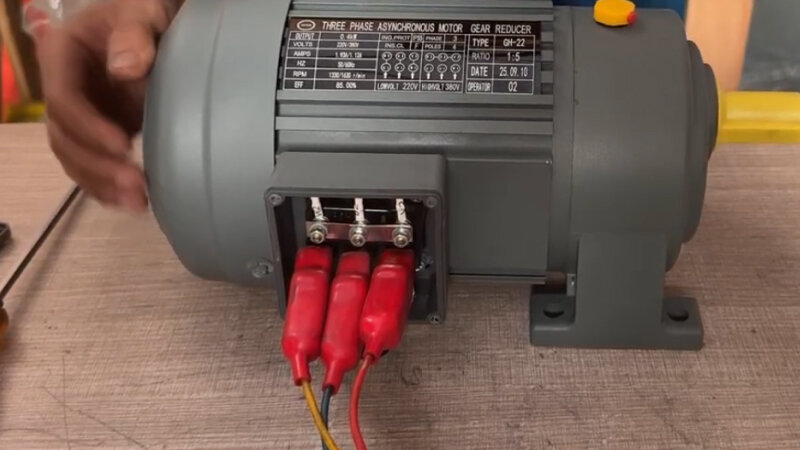
For 3 phase gear motors: Connect the 3 power wires to the corresponding positions U1, V1, W1. Do not connect to incorrect positions which will damage or burn the motor.
For mini gear motors: First, connect the speed control box to the motor through the power cord, matching the colors correctly. Next, connect the power to the motor, one wire to AC (N) and one wire to AC (L).
Customers can access the general video page in the gear motor video category to see more technical videos performed by technical specialists of Thanh Thai Motor.
Frequently Asked Questions (FAQ)
How to calculate the gear ratio (Ratio) suitable for actual needs?
The gear ratio (i) is the quantity that determines the output speed of the gearbox shaft. The basic formula is: i = nmotor/nout
Where: nmotor is the motor speed (usually 1450 rpm) and nout is the speed you need at the output shaft.
Choosing the right gear ratio not only helps the machine operate at the right power but also optimizes torque. At Thanh Thai Motor, we have common gear ratios available from 1/3 to 1/200, making it easy for customers to choose according to the requirements of the conveyor or drive system.
Why should the installation direction of the gear motor be noted?
The installation direction (foot-mounted, flange-mounted, horizontal, or vertical) directly determines the position of the air vents and the lubrication oil level inside the gearbox. If installed in the wrong direction compared to the original design, the lubrication oil may not cover all gears or may leak through the oil seals, leading to rapid gear wear or motor burnout.
When is it necessary to change the lubrication oil for the gear motor?
With new gear motors, you should change the first layer of oil after about 500 hours of operation to remove metal debris generated during the break-in process. After that, periodically every 2000 – 3000 hours (depending on the environment), the oil should be changed once.