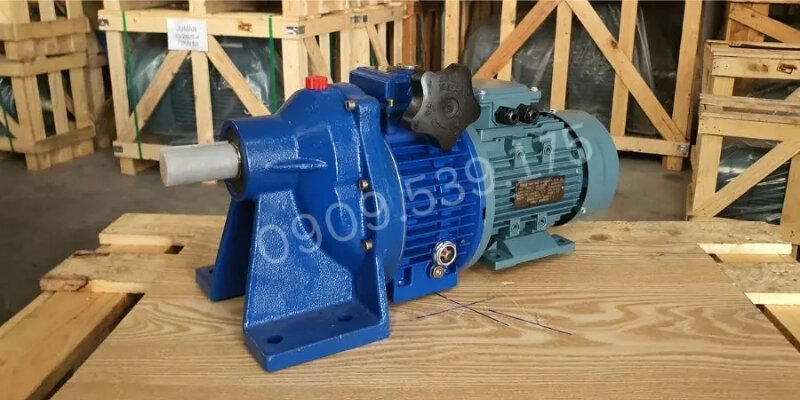
A 3-Stage Gearbox is an ideal device for applications requiring extremely high gear ratios. With a three-stage gear design, this 3-Stage Gearbox not only effectively reduces speed but also increases output torque, meeting the demand for high performance and exceptional durability in complex drive systems.
When combined with an electric motor, this 3-Stage Gear Reducer forms a gear motor, ideal for heavy industry applications such as conveyors, crushers, mixers, and industrial production systems requiring high load capacity and continuous operation.
What is a 3-Stage Gearbox?
Structure of a 3-Stage Gearbox
To better understand how a 3-stage gearbox operates, we need to master its structure. The main components of the gearbox include:
Input and output shafts: The input shaft receives motion from the motor, while the output shaft transmits the speed-reduced and torque-increased motion to the working equipment.
3-stage gear train: This is the most important component, comprising three pairs of meshing gears. Each gear pair performs speed reduction and torque increase to a certain degree, helping to achieve the desired gear ratio.
Cast iron or high-strength steel gearbox housing: The gearbox housing plays a role in protecting internal parts from external environmental impacts, while ensuring sturdiness and stability during operation.
Bearings, oil seals, washers, etc.: These details function to support the movement of the shaft and gears, reduce friction, and ensure lubrication, helping the 3-Stage Gearbox operate smoothly and durably.
Operating Principle of a 3-Stage Gearbox
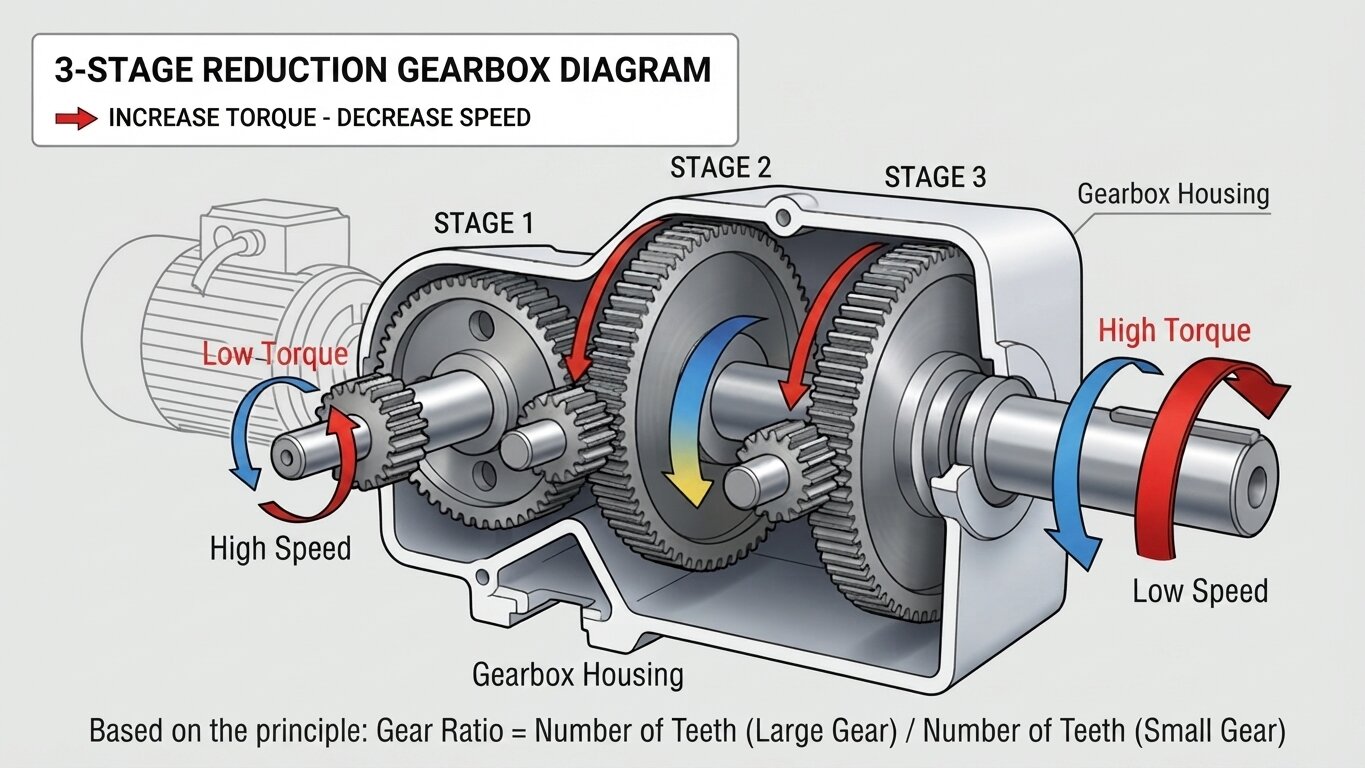
When combined with an electric motor, a 3-Stage Gearbox becomes a powerful gear motor. The operating principle of a 3-Stage Gearbox is based on power transmission through three consecutive gear stages. When the input shaft rotates, it transmits motion to the first gear. This gear meshes with a larger second gear, reducing rotational speed and increasing torque. This process repeats in the next two gear stages to achieve the final gear ratio.
Describe the power transmission through 3 gear stages to achieve a large gear ratio.
Torque is amplified after each transmission stage.
Capability to reduce output speed to a very low level to suit heavy loads.
Thanks to the three gear stages, the 3-stage gearbox is capable of reducing output speed to a very low level while amplifying torque multiple times. This is very useful in applications requiring high tractive force to operate heavy equipment.
Operating principle of a 2-stage gearbox
Types of 3-Stage Gearboxes
On the market today, there are many different types of 3-stage gearboxes, classified according to various criteria. Here are some common classification methods:
By Shaft Configuration
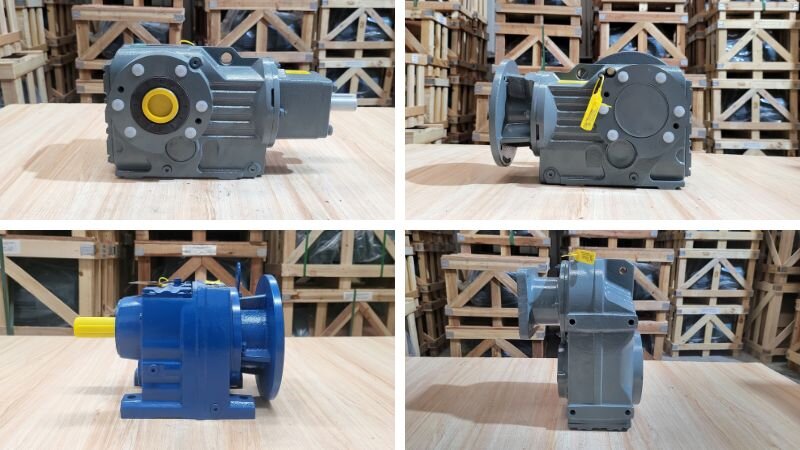
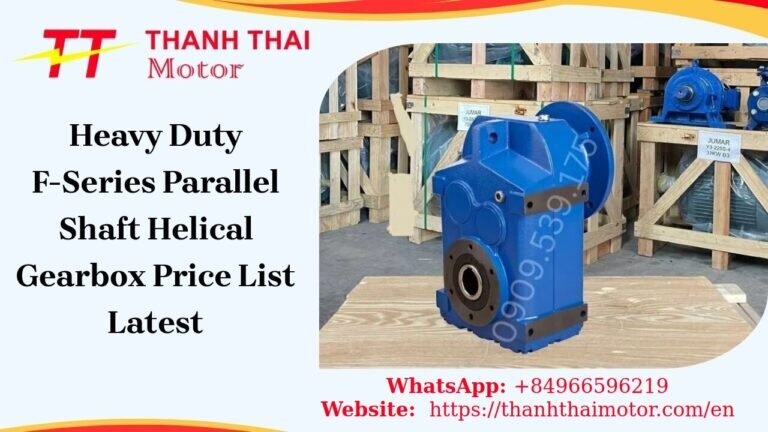
F-Series Parallel Shaft Helical Gearbox: This type has parallel input and output shafts, suitable for applications requiring straight-line transmission.
K-Series Helical Bevel Gearbox: This type has perpendicular input and output shafts, saving installation space and changing the transmission direction.
S-Series Helical Worm Gearbox: Similar to the K type, but with an additional intermediate shaft to increase the gear ratio and torque.
R-Series Inline Helical Gearbox: This type has a simple design, is easy to install and maintain, and is suitable for applications requiring high precision.
S, K, R, F gearboxes can be combined with an electric motor to form a 3-stage gearbox
By Brand
Some famous gearbox brands on the market include: Liming, TWT, Dolin, NMRV, SEW, etc. Each brand has its own advantages and characteristics, suitable for different customer segments and applications.
By Manufacturing Material and Load-Bearing Structure
Gearboxes can be made from various materials, such as steel, cast iron, or aluminum alloy. The manufacturing material and load-bearing structure directly affect the durability, load capacity, and lifespan of the gearbox.
Latest 3-Stage Gearbox Price at Thanh Thai Motor
The 3-Stage Gearbox Price depends on many factors, such as brand, size, gear ratio, manufacturing material, and other special features. For detailed information on pricing and promotional programs, please refer to the price list below or contact Thanh Thai Motor directly.
Like any mechanical equipment, a 3-stage gearbox also has its own pros and cons. Understanding these will help you make the best choice for your usage needs.
Advantages of a 3-Stage Gearbox
Very large gear ratio: Suitable for applications requiring strong pulling force, such as crushers, rolling mills, or heavy-duty lifting equipment.
High and stable transmission efficiency: Ensures that most of the input energy is transmitted to the output efficiently, saving energy and reducing operating costs.
Good load capacity, durable in harsh working environments: Capable of stable operation under high temperatures, dust, or strong vibrations.
High lifespan if properly maintained: If lubricated and checked periodically, a 3-Stage Gearbox can operate continuously for many years without failure.
Disadvantages to Note
Size and weight are usually larger than 1-stage or 2-stage gearboxes: This can cause difficulties in installation and transportation, especially in confined spaces.
More complex structure: Requires specialized technicians during installation or repair. Unauthorized disassembly or repair can cause serious damage.
Higher price compared to simple gearboxes: However, considering the performance and durability it provides, this is still a worthy investment.
Applications of a 3-Stage Gearbox
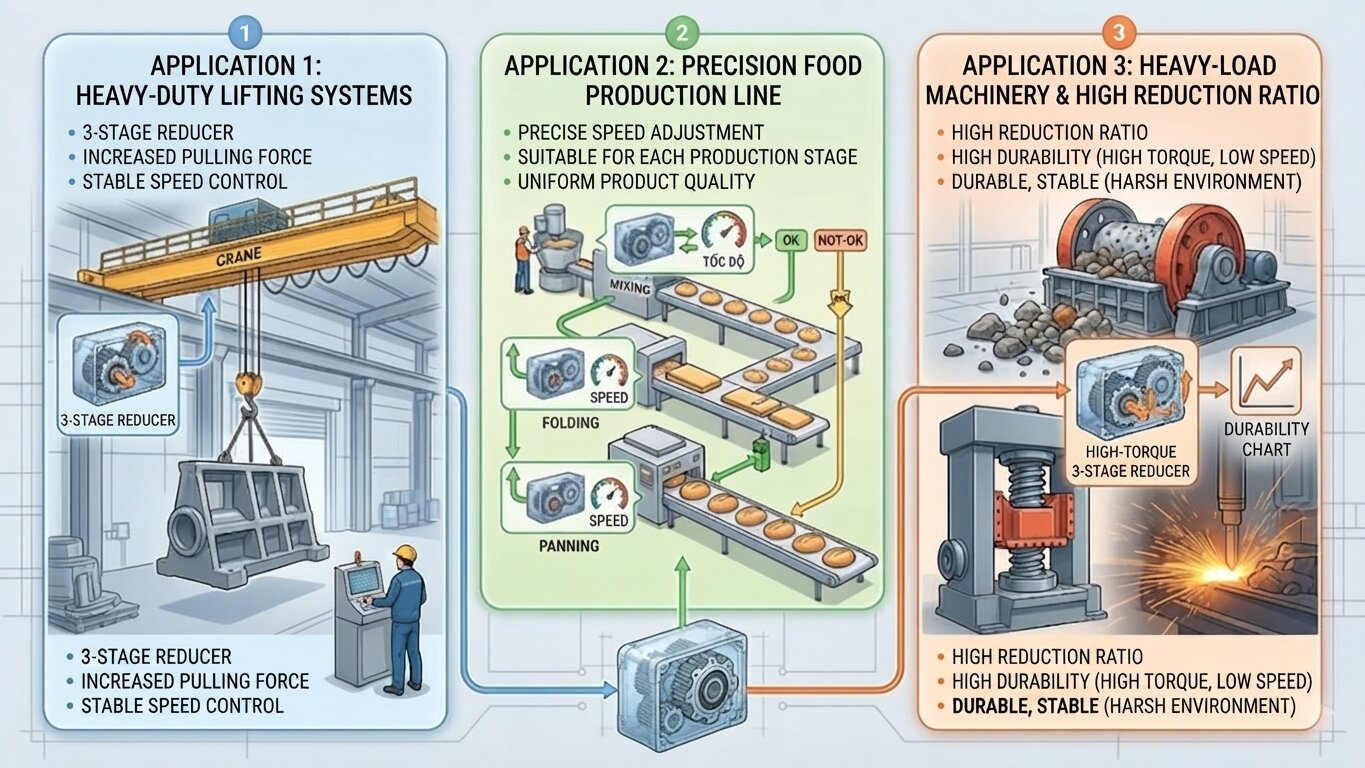
A 3-Stage Gearbox is designed to create a large gear ratio, providing deep speed reduction and strong torque multiplication. Thanks to this, the equipment is suitable for systems requiring high loads, stable operation, and high precision.
Lifting systems and heavy-duty drives: Used in industrial lifting systems, winches, and high-load transmission mechanisms. The 3-stage gearbox helps increase pulling force, control speed stably, and ensure safety during operation.
Production lines requiring precise speed adjustment: Applied in food processing, packaging, or industrial manufacturing lines. The equipment allows output speed adjustment to suit each stage, ensuring consistent product quality.
Machinery requiring a large gear ratio and high durability: Suitable for crushers, presses, rolling mills, or mechanical equipment needing high torque at low speeds. The 3-stage gearbox helps the system operate durably and stably in harsh working environments.
Applications of a 3-stage gearbox
Things to Note When Buying a 3-Stage Gearbox
Extremely large gear ratio and output speed limit: A 3-stage gearbox typically has a huge gear ratio range, ranging from i = 100 to thousands. You need to accurately calculate the actual rotational speed at the output shaft. If you miscalculate the gear ratio by a few digits, the machinery will run too slowly or too fast, ruining the entire line process.
Enormous torque and risk of output shaft breakage: Due to the 3-fold reduction, the pulling force generated at the output shaft is extremely immense. You must consult the catalogue table to check the maximum allowable torque force of the shaft. If your electric motor is too powerful compared to the load limit of the housing and gearbox shaft, when encountering an obstruction or jammed load, the massive twisting force will snap the output shaft or shatter the 3rd-stage gear assembly immediately.
Installation orientation determines lubrication position: The 3-stage gearbox contains many bearing assemblies supporting the intermediate shafts. The manufacturer will fill oil and arrange oil holes based on your chosen installation direction (M1 to M6). If you buy a horizontal gearbox but mount it vertically for use, the gear tiers and bearings at the very top will be completely starved of oil, leading to wear and seizure of the shaft supports after just a few days of operation.
Efficiency issue and heat generation phenomenon: Although the 3-stage helical gear line has fairly good efficiency (about 90% – 92%), due to multiple gear tiers and heavy oil resistance, the gearbox still generates very high heat when running continuously. You need to prioritize brands with thick cast iron housings, good cooling fin designs, and precise breather plugs to release internal hot gas pressure, preventing pressure from bursting the oil seal.
Frequently Asked Questions
Why does a 3-stage gearbox have a much larger output shaft than a 1-stage gearbox with the same motor power?
Because through 3 consecutive reductions, the output rotational speed is slowed down extremely much, causing the torque to surge tens of times. Manufacturers are forced to cast an oversized and thick output shaft to withstand this enormous torsional force without breaking.
Does pouring more lubricating oil into the 3-stage gearbox chamber make it cooler and more durable?
Completely wrong. A 3-stage gearbox has many interlaced rotating gear tiers. If too much oil is poured, the gears will have to expend extra force to “churn” and cut through the thick oil stream, causing aeration, higher heat generation, and increased internal pressure leading to seal tearing and oil leakage. Only pour oil up to the specified oil level sight glass.
How to quickly check if the internal 3rd-stage gear system is loose or worn?
Please fix (lock tightly) the input shaft (the shaft connecting to the motor), then use your hand to shake the output shaft firmly in the direction of rotation. Due to the stacked 3-pair gear structure, the total backlash will be larger than that of a 1-stage line, but if the output shaft shakes at an excessively large angle (over 2º – 3º) accompanied by loose “clattering” noises, it proves that the final-stage gear tiers are deeply worn and need maintenance.