


What is a booster pump?
A booster pump is a device used to increase water pressure in piping systems, helping water flow stronger and more stably at usage points such as showers, washing machines, water heaters, lavabos, or irrigation systems.
This type of booster pump is commonly used in areas with weak water sources, low water pressure, or multi-story houses needing improved domestic water flow. Thanks to its effective pressure-boosting capability, the pump makes water usage more convenient and stable in daily life.
Structure of a pressure booster pump
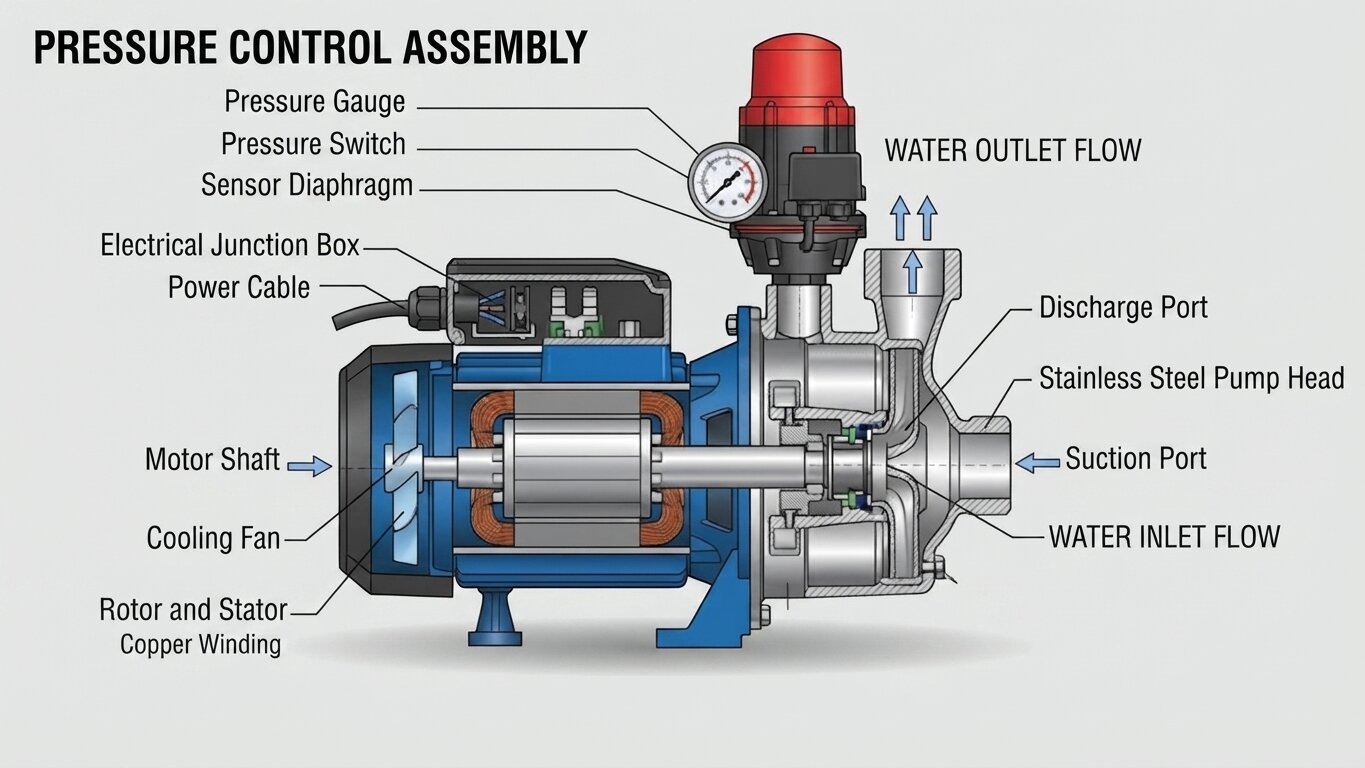
A pressure booster pump is composed of various parts, among which 4 key components determine its boosting capacity and operational stability during operation.
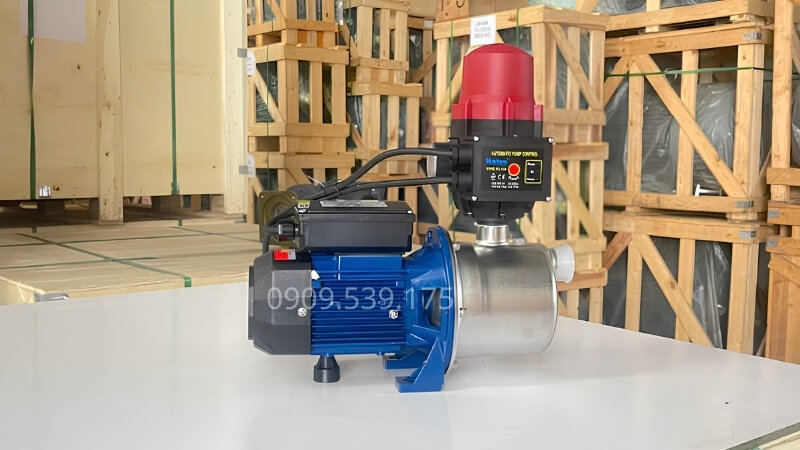
- Pump casing and pressure chamber: This is the outer protective frame, usually manufactured from cast iron, stainless steel, or sturdy engineering plastics. Inside the pump chamber is where water is drawn and pressurized before being delivered into the piping system.
- Water pump motor: The main movement-generating part for the machine, consisting of details such as rotor, stator, rotating shaft, and cooling fins. The motor is responsible for driving the pump impeller continuously to maintain water pressure.
- Pressure tank: This part helps stabilize the pressure in the pipeline and limits the situation of the pump turning on/off continuously. As a result, the pump operates more smoothly, reduces wear, and increases equipment lifespan.
- Pressure sensor relay: Functions to automatically control the operation of the pump based on the water pressure in the system. When pressure drops, the relay activates the pump and automatically disconnects when reaching the appropriate pressure level.
Operating principle of a booster pump
A booster pump operates on an automatic mechanism based on changes in water pressure within the pipeline. When the user opens the water faucet, the pressure in the pipeline decreases. At this time, the pressure relay senses the change and activates the pump motor. The machine starts drawing water from the source and pushes it into the system with stronger pressure, helping water flow evenly and stably at the consuming devices.
Conversely, when closing the water faucet, the pressure in the pipeline rises back up. When reaching the preset level, the relay automatically cuts off the power supply to stop the pump motor.
Thanks to this automatic operating mechanism, a booster pump only operates when water usage is required, helping to save energy, reduce equipment wear, and increase durability during use.
Classification of booster pumps
1-Phase booster pump
This is the most popular type today, using a 220V residential power supply, making it very suitable for households, townhouses, apartments, or small shops. The pump helps improve water pressure at showers, washing machines, water heaters, and daily living appliances.
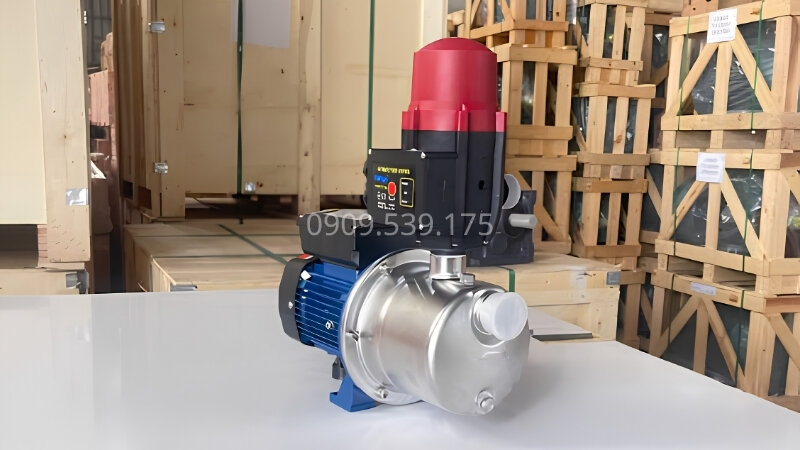
Booster pump under 3.7kW
This machine line has moderate power, saves electricity, and well meets the boosting demand for housing, eateries, car wash shops, or small-scale water supply systems. The advantages are easy installation, stable operation, and reasonable investment costs.
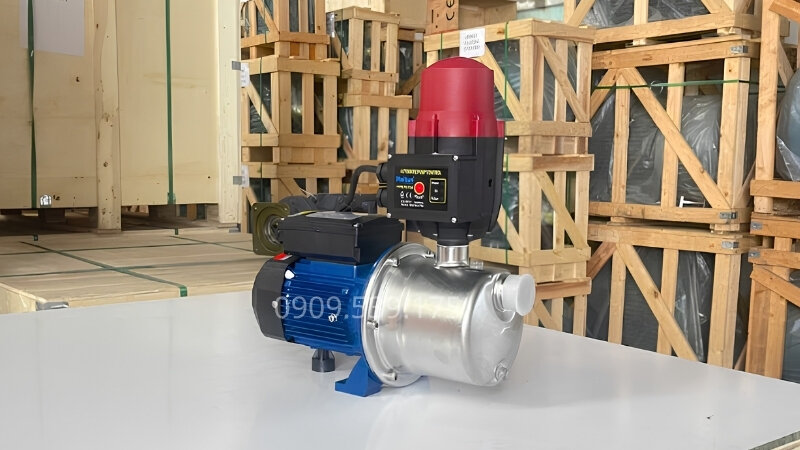
Booster pump under 50m3/h
Usually used in civil or small-scale water supply systems where a stable water flow is needed but not excessively large. Suitable for families, motels, shops, or mini irrigation and water supply systems.
Booster pump price at Thanh Thai Motor
Below is the booster pump price list at Thanh Thai Motor for your reference and selection of a suitable product.
Criteria for choosing a booster pump
For a booster pump to operate stably, limit pressure drops, and suit the actual water system, users should consider the following factors:
- Determine current water pressure status: If water is only slightly weak at the shower or upper floor, a small-capacity residential booster pump can be used. With overall weak water systems or multiple usage points simultaneously, choose a machine with higher pressure and flow rate to ensure even water output.
- Choose the appropriate boosting type: Mechanical booster pumps suit basic needs and have low costs. Meanwhile, electronic or variable frequency booster pumps operate more quietly, stabilize water pressure better, and limit continuous switching on/off.
- Prioritize motor smoothness and durability: For family environments, choose running models that are quiet, have low vibration, and use copper wire motors to reduce noise and limit overheating during long-term use.
- Note installation position and piping: It is necessary to check pipe dimensions, pump placement space, and equipment waterproof capability so that the installation process is convenient, safe, and easy to maintain later.
You can follow more in the water pump video category in Thanh Thai Motor’s comprehensive video system to observe actual operation and easily compare machine lines before choosing.
Frequently asked questions about booster pump [FAQ]
Are booster pumps automatic?
Most models today feature an automatic mode. The pump will automatically turn on when there is a demand for water and turn off when use stops, helping to save energy.
Do booster pumps make noise?
Some models may emit noise during operation, especially mechanical types. However, current electronic booster pump models have been improved to operate more quietly.
When is a pressure booster pump needed?
You should install a pressure booster pump when the water is weak, the pressure is not strong enough to use equipment like showers, water heaters, or when the water system experiences frequent pressure drops.


