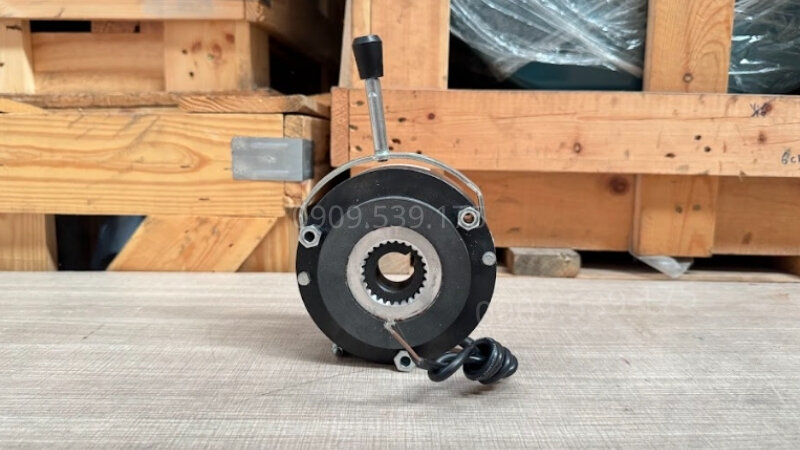
Electromagnetic Brakes below 5.5kW are electromagnetic braking devices designed to quickly and safely stop or reduce the speed of electric motors (1-Phase Electric Motors, 3-phase electric motors, explosion-proof motors) or gear motors (1 phase gear motors, 3 phase gear motors, mini gear motors). With a capacity below 5.5kW, it is suitable for applications requiring precise braking, helping to protect the motor and machinery system from unexpected incidents and wear.
Overview of Electromagnetic Brakes below 5.5kW
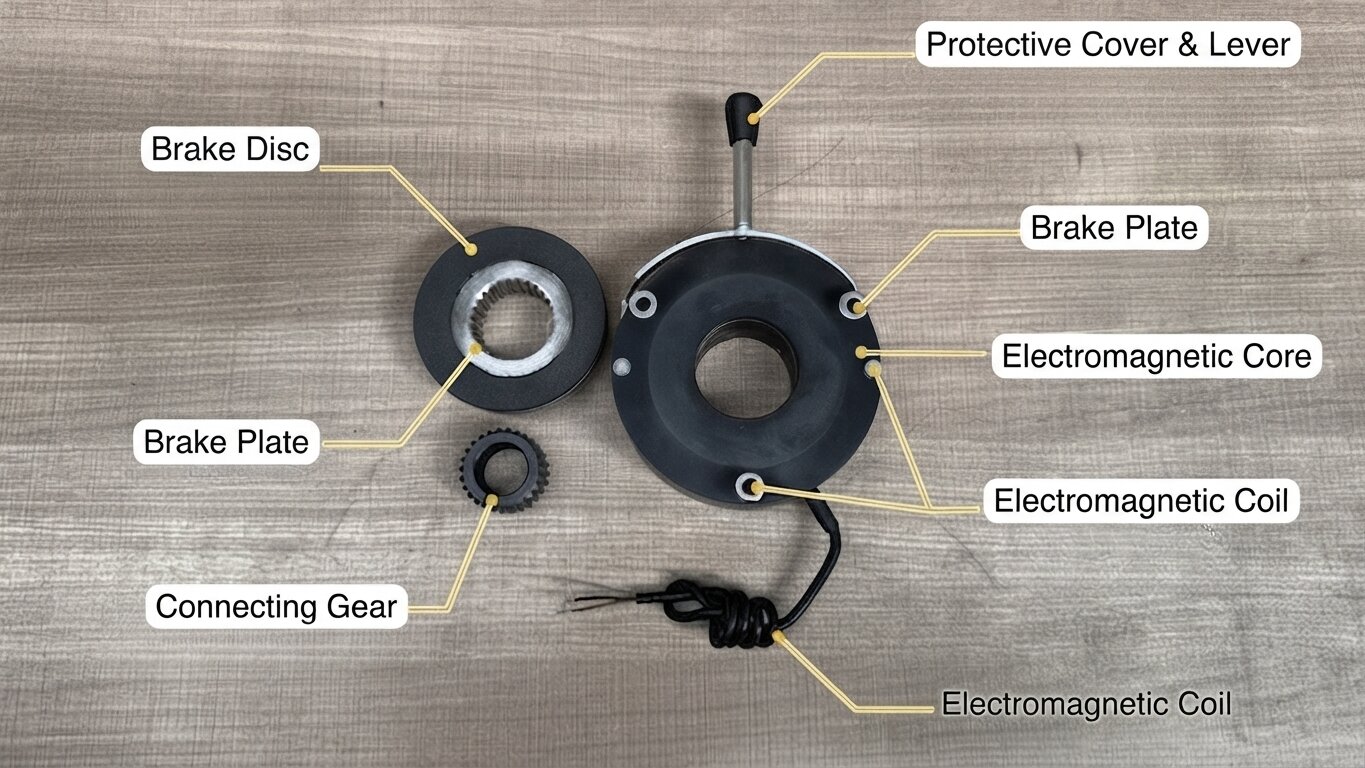
Structure of Electromagnetic Brakes below 5.5kW
Electromagnetic Brakes below 5.5kW are devices installed with electric motors to perform the function of braking and stopping the rotating shaft quickly when the power supply is cut off. The device has a relatively simple structure but plays an important role in ensuring safety and precision for the operating system.
Electromagnetic coil: The component that generates a magnetic field when energized, helping to control the release or braking process.
Brake disc: Connected to the motor shaft, responsible for creating frictional force to stop the rotational movement when the brake operates.
Brake plate: The surface in contact with the brake disc, helping to create braking force and keep the shaft stationary when power is disconnected.
Compression spring: Creates pressure on the brake disc when there is no electricity, keeping the brake always in a safe braking state.
Electromagnetic armature: Works together with the electromagnetic coil to control the engagement or release of the brake during operation.
Protective housing: Encloses the entire electromagnetic brake assembly, protecting internal components from dust and external environmental impacts.
Connecting shaft: Connects the electromagnetic brake to the motor, ensuring that the transmission and braking process takes place accurately and stably.
Structure of Electromagnetic Brakes below 5.5kW
Working Principle of Electromagnetic Brakes below 5.5kW
Electromagnetic Brakes below 5.5kW operate based on the principle of combining electromagnetic force and mechanical force to control the motor braking process. When the motor is energized, the electromagnetic coil generates a magnetic field that attracts the armature, releasing the brake and allowing the motor shaft to rotate freely.
Conversely, when the power source is cut off, the magnetic field disappears and the spring system automatically presses the brake plate against the brake disc, creating frictional force to brake and stop the rotating shaft in a short time. This mechanism helps the motor stop quickly, hold the load safely, and limit drifting rotation in applications requiring high precision.
Applications of Electromagnetic Brakes below 5.5kW
Electromagnetic Brakes below 5.5kW have many outstanding advantages, so they are used in many industries, including:
Conveyor and material handling systems
Electromagnetic brakes are installed in conveyor systems and material handling systems transporting rice, paddy, animal feed, and various other goods. The device helps control rotation speed, supports deceleration and safe machine stopping, limits load slipping, and improves operating efficiency.
Food processing and packaging machinery
Applied in stirrers, mixers, and food packaging machinery, electromagnetic brakes help ensure stopping at the right time, increase precision, and limit errors in production.
Production lines requiring safe braking
In industrial production lines where fast and stable braking speeds are required, Electromagnetic Brakes below 5.5kW play an important role in protecting equipment, reducing incident risks, and optimizing operating costs for businesses.
Applications of Electromagnetic Brakes below 5.5kW
Prices for Electromagnetic Brakes below 5.5kW at Thanh Thai Motor
Below is the latest price list for Electromagnetic Brakes below 5.5kW at Thanh Thai Motor, updated for customers to easily refer to and choose the right product for their usage needs.
Notes on Using Electromagnetic Brakes below 5.5kW at Thanh Thai Motor
For Electromagnetic Brakes below 5.5kW to operate stably, ensure precise braking capability, and extend equipment lifespan, customers should note the following important issues:
Use the correct power supply voltage for the electromagnetic brake: Check the operating voltage according to the technical specifications to avoid the brake not releasing completely or braking inefficiently.
Proper technical installation: Ensure that the brake assembly is precisely aligned with the motor shaft to limit wear and vibration during operation.
Check brake pad wear: Regularly monitor the friction surface for timely maintenance or replacement when necessary.
Keep the equipment clean: Limit dust, grease, or moisture from adhering to the brake surface as it can affect braking efficiency.
Do not switch on and off continuously with excessively high frequency: Continuous brake operation for a long time can increase temperature and reduce component lifespan.
Periodic maintenance: Check the electromagnetic coil, springs, and mechanical parts to ensure the brake always operates stably.
For convenience in researching and selecting, customers can watch more electromagnetic brake videos in the comprehensive video category, thereby practically referring to many product lines currently being widely used.
Frequently Asked Questions [FAQ]
Do electromagnetic brakes operate when power is lost?
Yes. Most industrial electromagnetic brakes operate on the principle that when power is lost, the brake automatically engages to hold the load.
Why do electromagnetic brakes not release?
The cause is usually a damaged coil, insufficient supply voltage, or improperly adjusted brake clearance.
Is it normal for electromagnetic brakes to get hot?
Mild heating can occur during continuous operation. If the temperature is too high, it is necessary to check the power supply and coil condition.