


What are chain couplings?
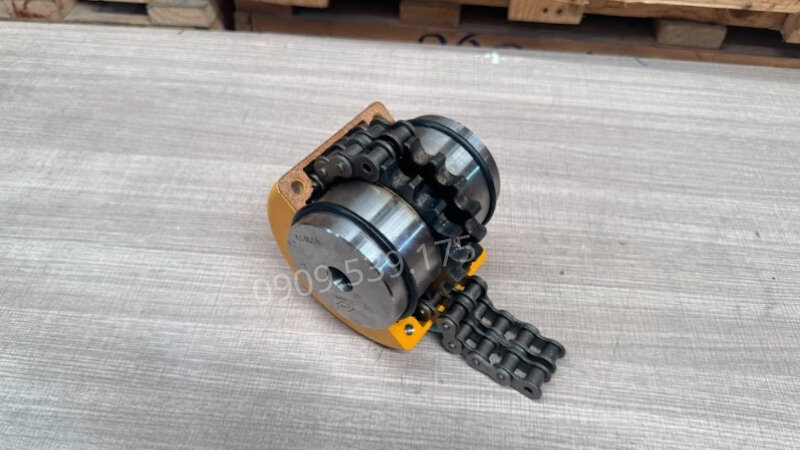
A chain coupling is a mechanical coupling used to connect two drive shafts, enabling stable torque transmission between the electric motor and the gearbox. With a construction consisting of two sprocket wheels and an intermediate roller chain, chain couplings offer high load capacity, compensate for minor shaft misalignment, and operate efficiently in harsh environmental conditions. Thanks to their simple structure, high durability, and easy maintenance, chain couplings are widely applied in industrial drive systems such as conveyors, mixers, agitators, and various other mechanical machinery.
Operating principle of chain couplings
Chain couplings operate on a mechanical power transmission mechanism through the connection between the chain and two sprockets mounted on the shafts. When the motor begins to rotate, the rotational force from the drive shaft is transmitted directly to the driving sprocket, causing the chain to move along the meshing trajectory.
This movement continues to be transmitted to the remaining sprocket, thereby creating rotational synchronization between the two shafts in the system. During operation, the small clearance between the chain and sprockets allows the coupling to adapt to certain installation misalignments while helping reduce impact forces when the load changes abruptly.
Thanks to the metal link drive characteristics, the coupling is capable of working well under medium to heavy load conditions while limiting slippage like conventional frictional drives.
Popular types of chain couplings at Thanh Thai Motor
Based on shaft diameter and practical usage needs, chain couplings at Thanh Thai Motor are classified into groups to meet diverse industrial drive applications.
Chain couplings under 50mm
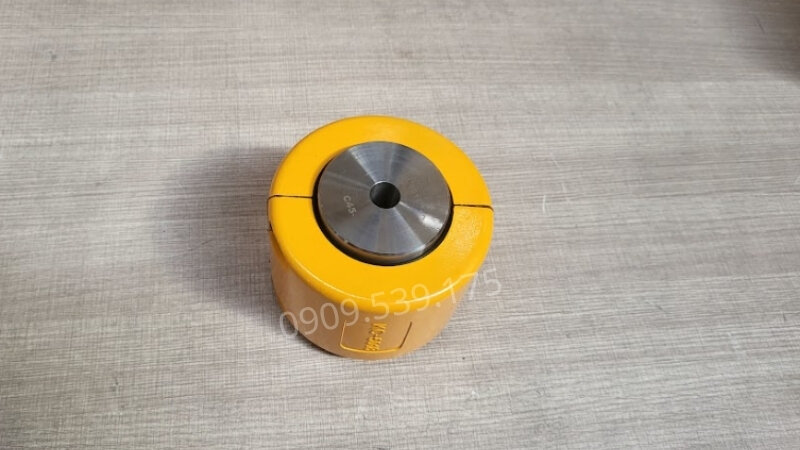
This is a small-sized chain coupling line, suitable for low to medium-power drive systems. The product is commonly used in lightweight mechanical machinery, small conveyors, or equipment requiring compact construction, easy installation, and stable operation.
Outstanding chain coupling prices at Thanh Thai Motor
Thanh Thai Motor updates chain coupling prices with various product lines and specifications, helping customers easily reference and choose according to actual drive needs.
Notes when purchasing chain couplings
For chain couplings to operate stably and suit the drive system, customers need to carefully consider several technical factors before making a selection:
- Actual load and torque: It is necessary to determine the exact transmission force of the system to choose a coupling with corresponding load capacity, avoiding overload that causes chain stretching or rapid wear.
- Installation shaft dimensions: Ensure that the motor shaft and machine shaft diameters match the coupling hub, helping fix it securely and avoid vibration during operation.
- Type and chain pitch used: Choose the correct chain standard (single, double, or multi-strand) and compatible chain pitch to ensure precise meshing.
- Alignment between the two shafts: Large misalignment can increase chain wear and reduce the lifespan of the entire drive system.
- Manufacturing material quality: Prioritize high-hardness steel or alloy to ensure stable working capability in medium to heavy load environments.
Customers can refer to the coupling video summary category to observe various product models in practice, thereby easily evaluating and selecting the type suitable for their usage needs.
Frequently Asked Questions [FAQ]
What are the advantages of chain couplings?
Good load capacity, stable power transmission, easy installation and replacement, suitable for industrial environments.
Do chain couplings stretch?
Yes. After a period of use, the chain may stretch, reducing transmission accuracy and requiring re-tensioning.
When is it necessary to replace chain couplings?
They should be replaced when the chain is heavily worn, excessively stretched, sprocket teeth are chipped, or transmission is no longer stable.


