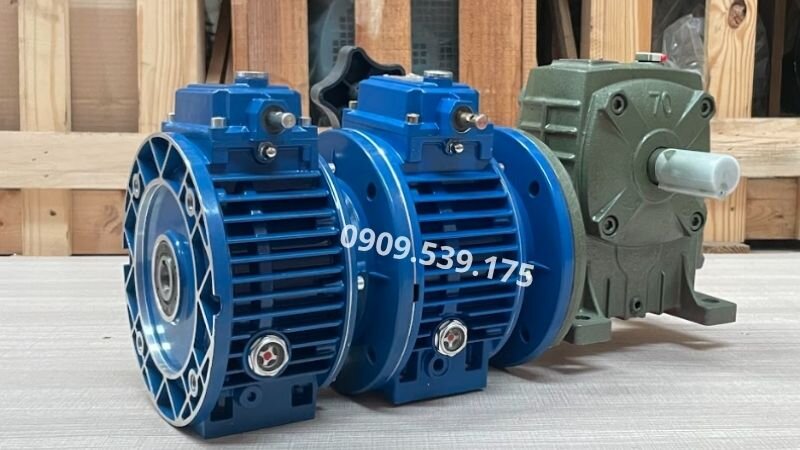
A 3-Stage Mechanical Speed Variator, also known as a 3-stage speed adjustment device, is a mechanical transmission device used to change the output speed of an electric motor. When this Gearbox is combined with an electric motor, it forms a Gear Motor. The Mechanical Speed Variator allows selecting one of three fixed speeds through gear stages or belt systems with different transmission ratios, meeting flexible operation needs in various industrial applications.
3-Stage Mechanical Speed Variators operating durably at Thanh Thai Motor.
Advantages of 3-Stage Mechanical Speed Variators
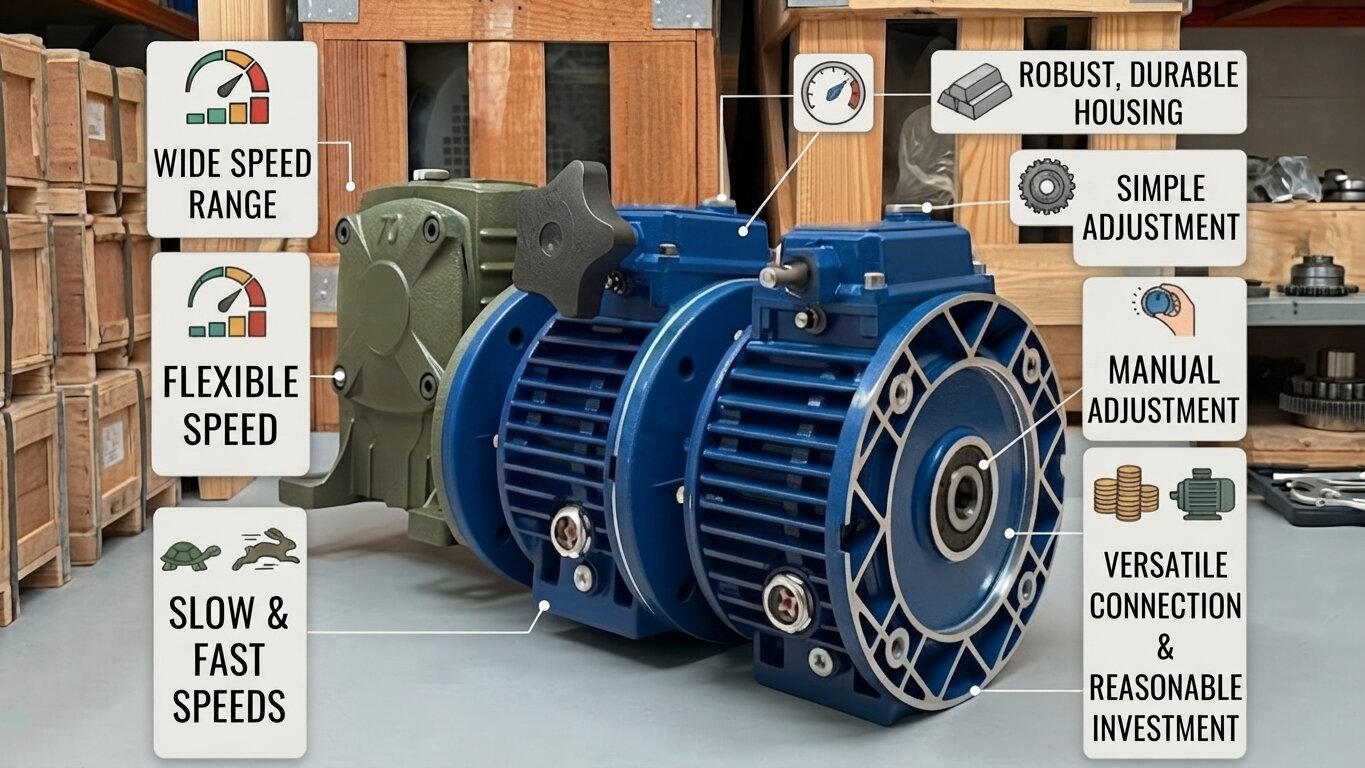
Wide speed adjustment range: Compared to 1-Stage and 2-stage mechanical speed variators, the 3-stage line allows speed changes within a larger range, suitable for various operating modes.
Flexible for various types of machines: It can meet both the need for slow running to gain traction and fast running to increase production efficiency.
Durable mechanical structure: The body of the mechanical speed variator is usually made of cast iron or aluminum alloy, helping to increase rigidity and reduce vibration during operation.
High-durability transmission: Friction discs, shafts, and working surfaces typically use heat-treated alloy steel, enhancing wear resistance.
Independent of electronic equipment: Speed can still be adjusted right at the machine without the need for complex control systems.
Multiple connection options: Can be combined with electric motors, Gearboxes, or other industrial transmission assemblies.
Reasonable investment cost: Well meets the need for mechanical speed changes with much lower investment than many electronic control systems.
Advantages of 3-Stage Mechanical Speed Variators.
Applications of 3-Stage Mechanical Speed Variators
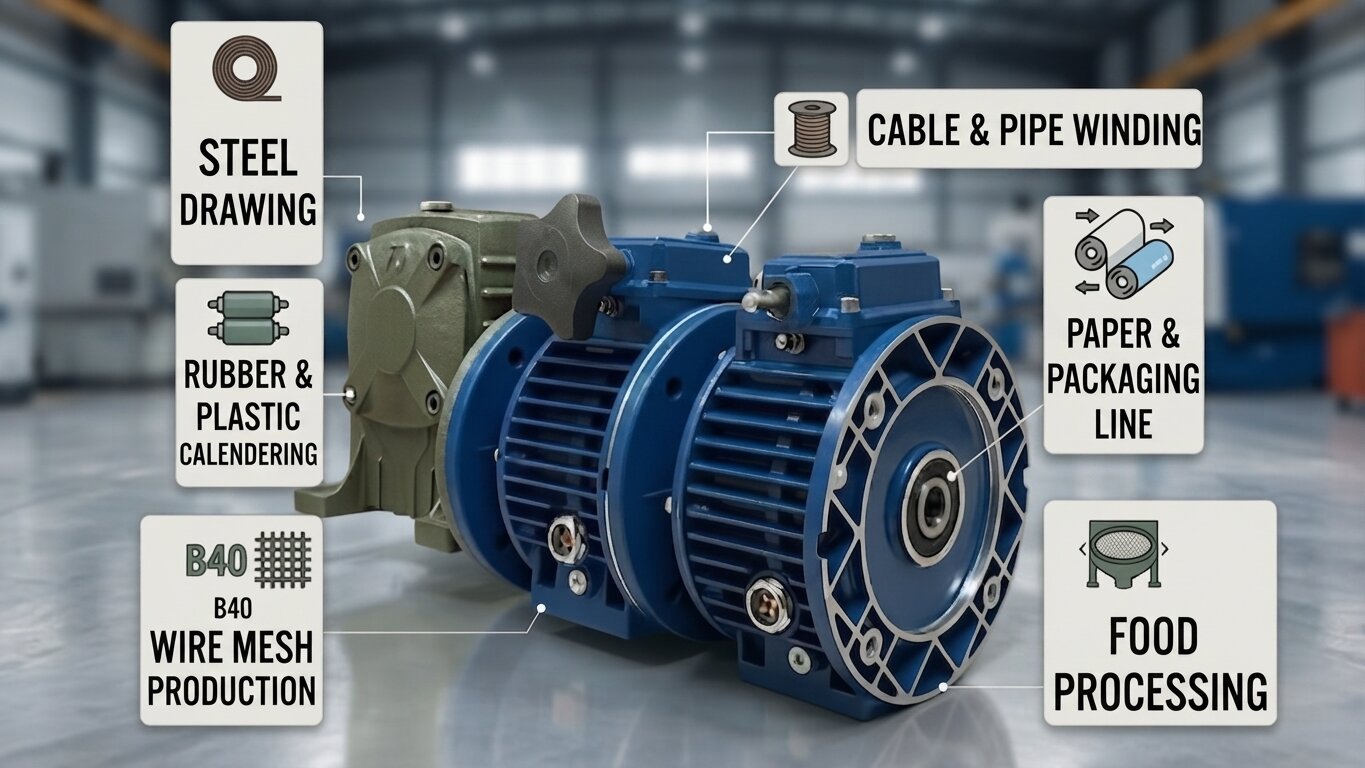
Steel drawing machines and industrial wire drawing machines:3-Stage Mechanical Speed Variators help adjust the drawing speed to suit each material type, wire diameter, and production stage, contributing to improving finished product quality and limiting wire breakage during processing.
Rubber calendering machines and plastic calendering machines: Allow flexible changes in roller shaft speed according to material thickness, working temperature, and actual production requirements, helping products achieve higher uniformity.
B40 wire mesh and steel mesh production machines: Support adjusting the mesh-forming speed to suit each mesh specification, while helping the machine operate stably when changing product sizes.
Pipe winding, electric cable winding, and copper wire winding machines: Meet the need for continuous speed changes during winding, especially as the material roll diameter gradually increases over operating time.
Paper, packaging, and plastic film production lines: Used to adjust material pulling speed between stages, helping synchronize the working speed of the entire line.
Agricultural and food processing machines: Suitable for crushing, mixing, screening, or feeding equipment that requires speed changes according to each type of material and production capacity.
Applications of 3-Stage Mechanical Speed Variators.
Featured 3-Stage Mechanical Speed Variators Price List at Thanh Thai Motor
Below are some prominent 3-Stage Mechanical Speed Variators distributed by Thanh Thai Motor, suitable for various power levels and speed adjustment needs in industrial production.
Criteria for Purchasing 3-Stage Mechanical Speed Variators
Evaluate the operating characteristics of the system: Wire drawing machines, material winding machines, calendering machines, or mixers often have continuously changing loads, so it is necessary to choose a speed variator with good load-bearing capacity and stable long-term operation.
Check manufacturing materials: Priority should be given to lines with sturdy cast iron casings, alloy steel shafts, and high wear-resistant friction discs to increase lifespan during continuous operation.
Consider daily operating hours: For factories running 2-3 shifts or operating almost continuously, equipment with reserve capacity should be selected to reduce pressure on the transmission system.
Check installation dimensions: It is necessary to check the input shaft diameter, output shaft diameter, flange, shaft center height, and installation space to avoid rework during installation.
Ability to combine with a Gearbox: If the system requires a very low output speed, both the mechanical speed variator and Gearbox should be calculated simultaneously from the beginning to achieve the best operating efficiency.
Choose a supplier with technical support: Receiving proper advice on the speed range, transmission ratio, and installation plan will help limit errors arising during later use.
In addition, customers can refer to more summary videos at Thanh Thai Motor. The Gearbox video content will guide you on choosing the appropriate motor power, how to combine the speed variator with a Gearbox, commonly used transmission ratios, as well as practical notes during installation and operation.
Frequently Asked Questions
The copper wire drawing machine is running at 15m/min and needs to be increased to 25m/min without changing the motor. Can 3-Stage Mechanical Speed Variators meet this requirement?
This depends on the current speed range of the speed variator. If the working speed is in the middle of the adjustment range, it can still be increased without changing the motor.
Why does the cable winding machine run stably with small rolls but the speed decreases when the roll is nearly full?
When the roll diameter increases, the load torque also increases. If the mechanical speed variator or motor is chosen close to the load limit, the speed will decrease when the roll reaches a large size.
Are 3-Stage Mechanical Speed Variators suitable for rubber calendering machines running continuously 24/7?
They can be used if the correct power and actual load are selected. In continuous working lines, a load safety factor should be included to increase the lifespan of the speed variator.