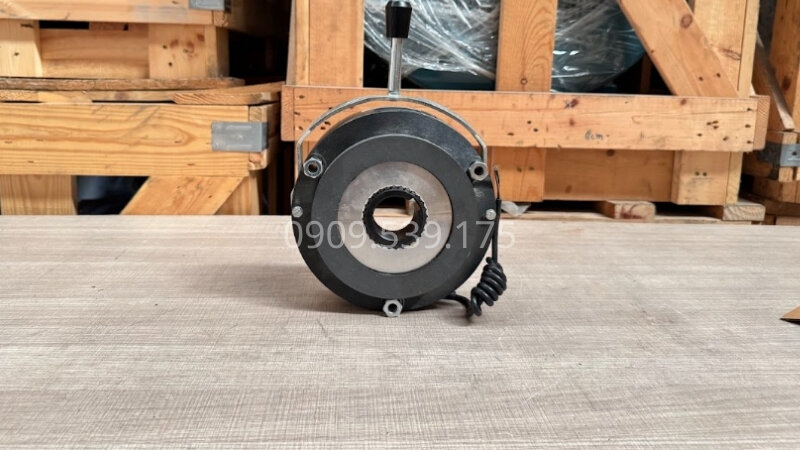
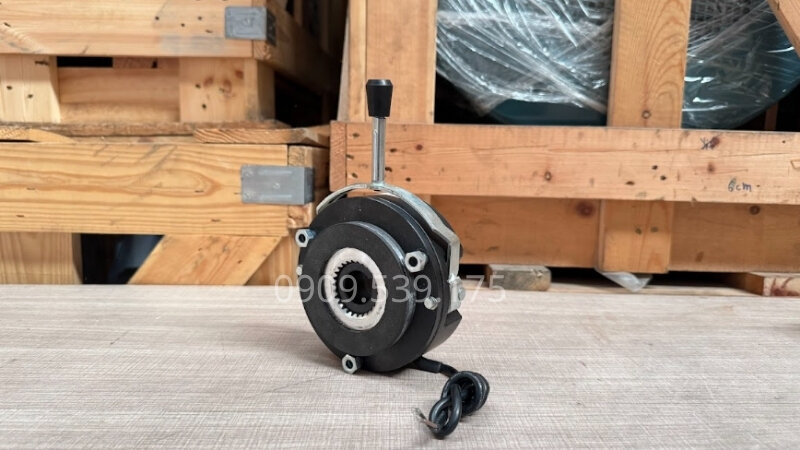
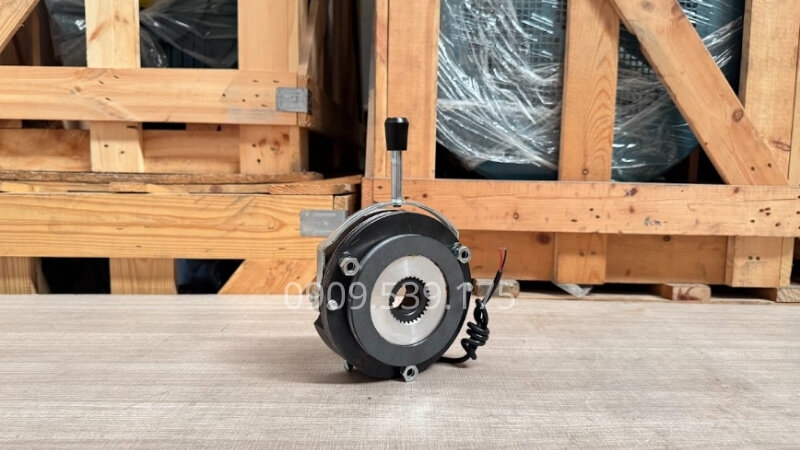
Electromagnetic brakes are components used to precisely reduce or stop the speed of electric motors or gear motors. With various sizes and compatibility with many motor types, electromagnetic brakes are widely applied in industrial machinery, electric vehicles, electric trains, and numerous automated operating systems. Thanks to their fast, stable, and safe braking capability, electromagnetic brakes help effectively control rotational speed and can be combined with electric motors or gear motors in many different applications.
What are electromagnetic brakes
Structure of Electromagnetic Brakes
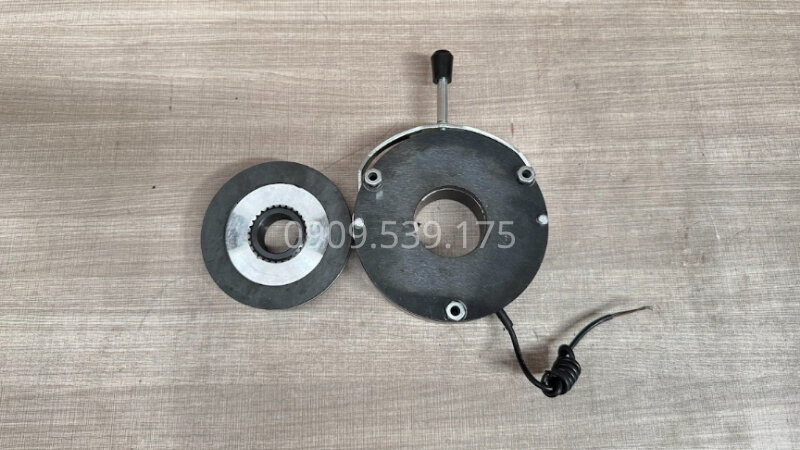
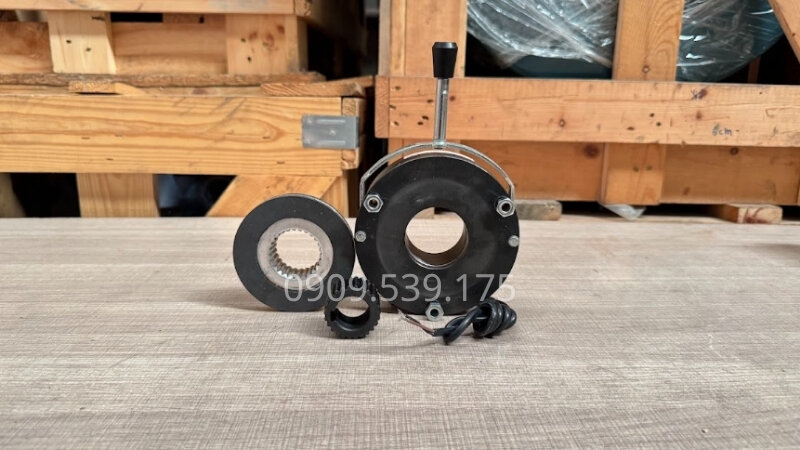
Electromagnetic brakes come in various designs, but fundamentally, they consist of two main components: the electromagnet and the armature (rotor).
Electromagnet: Composed of a copper coil. When power is supplied, the coil generates a strong magnetic field to create an attractive or braking force. This magnetic force helps control the motor’s rotational movement, quickly decelerating or stopping the equipment.
Armature (rotor): This is the rotating component, usually made from a magnetic material. When the magnetic field from the electromagnet acts on the rotor, a resistive force is generated, which helps decelerate the rotational speed or hold the motor shaft stationary as required for operation.
The combination of the electromagnet and rotor enables electromagnetic brakes to operate stably, respond quickly, and ensure safety during use.
Structure of electromagnetic brakes
Operating Principle of Electromagnetic Brakes
Electromagnetic brakes operate based on the principle of electromagnetic induction. When power is supplied to the coil, the electromagnet generates a strong magnetic field that acts on the rotor. At this point, the rotor is attracted or creates a resistive force, helping to slow down or stop the rotational movement of the equipment.
The braking force can be varied by adjusting the intensity of the supplied current. The greater the current, the stronger the magnetic force, and the higher the braking capability. Conversely, when power is disconnected, the magnetic field disappears, and the armature returns to its initial state, allowing the system to operate flexibly without jamming.
Thanks to this principle, electromagnetic brakes offer fast braking, stable operation, and ensure safety for both the motor and the drive system.
Classification of Electromagnetic Brakes
Based on the power corresponding to the electric motor, electromagnetic brakes are classified into the following 3 basic types:
Electromagnetic Brakes below 5.5kW
Electromagnetic brakes below 5.5kW are typically used for light-duty applications, suitable for low-power motors and those that do not require excessive braking force.
Electromagnetic brakes below 5.5kW
Electromagnetic Brakes from 5.5kW to 7.5kW
Electromagnetic brakes from 5.5kW to 7.5kW are used for medium-duty applications, meeting the braking demands for medium-power motors, commonly found in small industrial machinery.
Electromagnetic brakes from 5.5kW to 7.5kW
Electromagnetic Brakes above 7.5kW
Electromagnetic brakes above 7.5kW are used for heavy-duty applications, requiring high braking force, commonly applied in large-scale industrial equipment and heavy loads.
Electromagnetic brakes above 7.5kW
Criteria for Choosing Electromagnetic Brakes
When choosing electromagnetic brakes, it is important to consider several key factors to ensure stable equipment operation and suitability for the intended system.
Suitable Technical Specifications: It is necessary to choose electromagnetic brakes with appropriate braking force, voltage, and size to match the motor power and actual load, ensuring safe and efficient operation.
Durability and Working Environment: For dusty, humid, or continuously operating environments, prioritize models with good heat dissipation, high-quality coils, and stable durability.
Installation and Operation Capability: Select models that are easy to install, respond quickly, and operate smoothly to minimize vibration and wear during long-term use.
You can also refer to other electromagnetic brake models in the compilation video under the electromagnetic brakes video category to better understand their structure, operating principle, and how to choose suitable products.
Electromagnetic Brakes Price List Updated 10/2026 at Thanh Thai Motor
Price Quote for Electromagnetic Brakes below 5.5kW
Below is the price list for electromagnetic brakes below 5.5kW for your reference and selection based on your usage needs.
Electromagnetic Brake Price Quotation Video 10/2026 - Thanh Thai Motor
rn
Frequently Asked Questions [FAQ]
What are the common types of electromagnetic brakes today?
Currently, there are many different types of electromagnetic brakes, such as dry type electromagnetic brakes, wet type electromagnetic brakes, DC electromagnetic brakes, or electromagnetic brakes used for 3-phase electric motors. Each type is suitable for specific load capacities and operating conditions.
Do electromagnetic brakes affect motor lifespan?
If used with the correct power rating and installed correctly, electromagnetic brakes do not adversely affect the motor. On the contrary, the device helps the system operate more stably and safely.
Are electromagnetic brakes prone to damage?
Electromagnetic brakes are quite durable if operated under the correct load and voltage. However, if continuously used in dusty, high-temperature, or overloaded environments, the device may degrade faster.