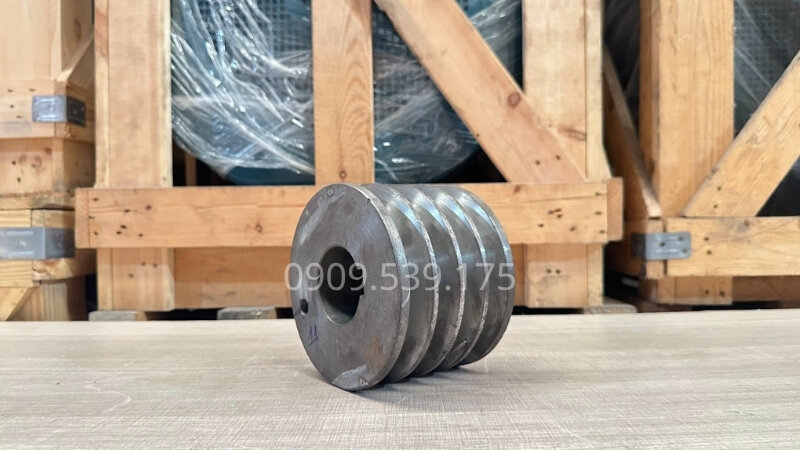
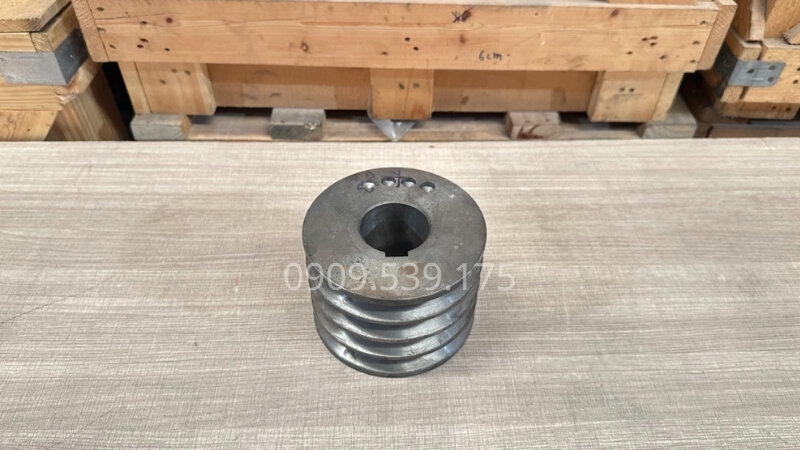
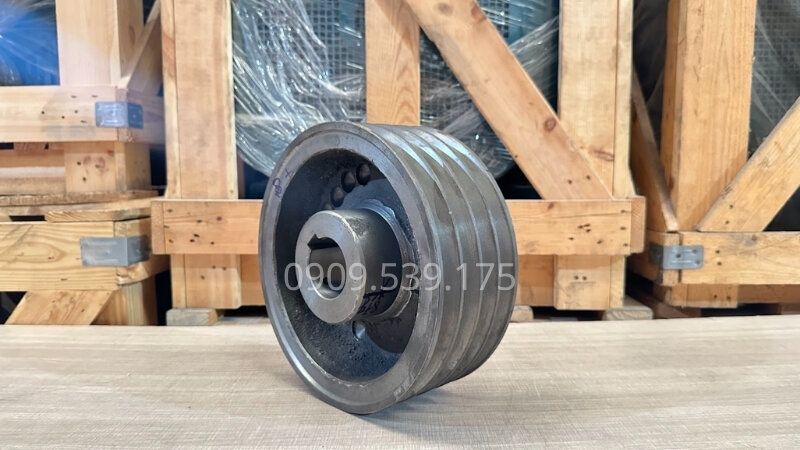
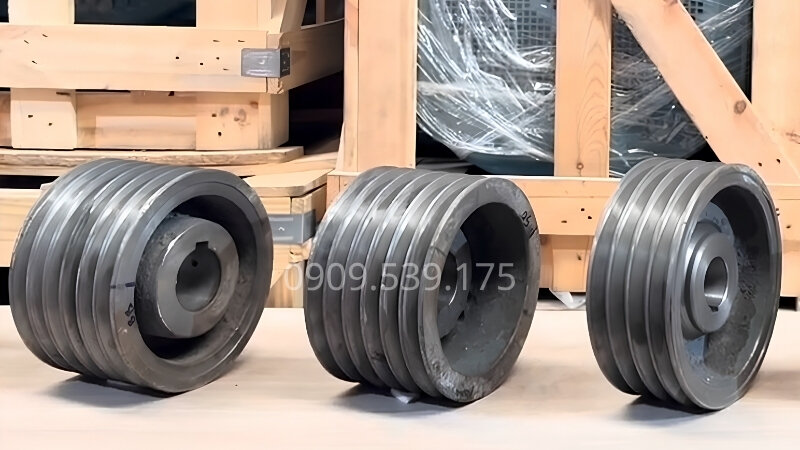
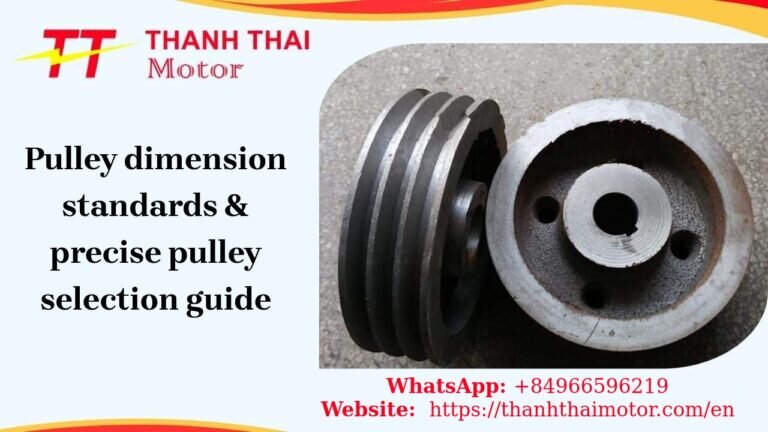
Pulleys (also known as belt wheels or sheaves) are mechanical components installed directly on the electric motor shaft, responsible for transmitting motion to equipment such as conveyor belts, fans, or compressors.
These components are typically round, made from aluminum, steel, or plastic, helping to adjust rotational speed and torque according to operational requirements. At the same time, pulleys also contribute to reducing friction during power transmission, making the system run smoother, more stable, and enhancing overall efficiency.
What are pulleys?
Structure of pulleys
A standard pulley typically has three main parts, each playing a distinct role in the power transmission process:
Pulley body: This is the largest, round-shaped part that bears all the force during operation. This component helps transmit motion from the motor to other equipment stably.
Pulley groove: Located on the surface of the body, its purpose is to keep the belt firmly attached when rotating. Depending on the belt type, the groove will be designed with an appropriate shape and size to prevent slipping.
Shaft bore (pulley hub): This is the central part of the pulley, used for mounting onto the motor shaft. It is typically machined precisely to ensure a snug fit, allowing the pulley to rotate concentrically and minimize vibration during operation.
Operating principle of pulleys
The operating principle of pulleys is based on transmitting motion via a belt between the pulleys. When the motor rotates, the pulley attached to the motor shaft also rotates, pulling the belt into motion. This force is then transmitted to the other pulley, causing the equipment to rotate. Thanks to the engagement between the pulley groove and the belt, power transmission occurs stably, minimizing slipping.
Additionally, depending on the diameter of each pulley, the system can change rotational speed and torque. A combination of large and small pulleys helps increase or decrease speed as needed, offering great flexibility in practical applications.
Types of pulleys
Based on shaft diameter, pulleys are classified into two types:
Pulleys under 50mm
Pulleys under 50mm are typically used in small, light applications, suitable for low-power motors and not requiring heavy loads.
Pulleys under 50mm
Pulleys over 50mm
Pulleys over 50mm are used for larger applications, with higher load-bearing capacity, commonly found in industrial machinery and powerful drive systems.
Pulleys over 50mm
Pulley price list updated 10/2026
Price list for pulleys under 50mm
Products are available in various shaft sizes, optimizing investment costs. Below is the price list for pulleys under 50mm, allowing customers to easily compare and choose suitable options.
Pulley price quote video 10/2026 - Thanh Thai Motor
rn
Considerations when choosing pulleys
Choosing the right motor pulley directly impacts the durability and performance of the entire drive system. When selecting, you should consider the following factors:
Type of belt used: First, identify the type of belt to be used, such as V-belts, flat belts, or synchronous belts. Each type requires a different pulley groove; choosing incorrectly can lead to slipping or rapid wear.
Pulley size: The pulley diameter determines the transmission ratio and rotational speed. Choosing the correct size will help the system achieve the desired speed and ensure adequate torque for the load.
Material of manufacture: Pulleys can be made from steel, aluminum, or plastic. For heavy-duty, dusty, or humid working environments, prioritize hard, load-bearing, and corrosion-resistant materials to enhance durability.
Load and operating speed: It is necessary to calculate the actual load and rotational speed of the system. Pulleys must meet both of these factors to prevent damage, vibration, or reduced lifespan during long-term use.
Selecting the correct pulleys not only helps the machine run stably but also reduces malfunctions and saves on future maintenance costs.
Considerations when choosing pulleys
Guide to installing and removing motor pulleys
For 3-phase motor pulleys, the installation and removal process must be carried out correctly to ensure safety and prevent damage to the motor shaft.
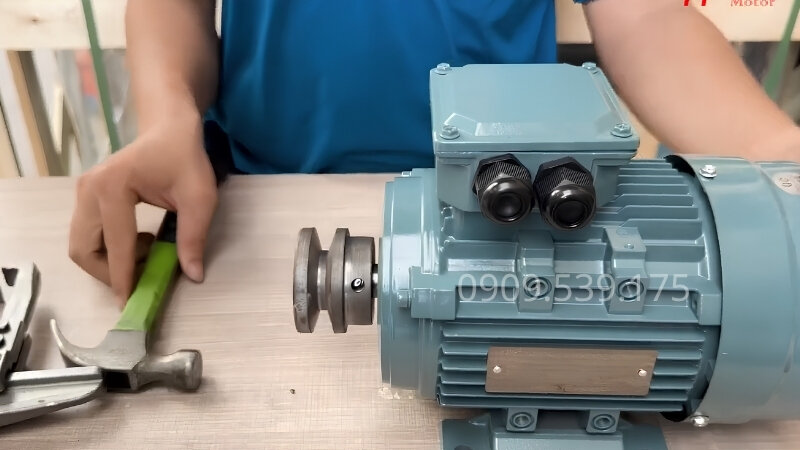
When installing a pulley, first align it correctly to match the motor shaft key. Then, use a hammer to gently and evenly tap the pulley onto the shaft, avoiding strong impacts that could bend the shaft or cause eccentricity. After installation, perform a test run to check for smooth operation and ensure the motor runs stably.
Conversely, when removing a pulley, use a puller to secure the pulley firmly before operating. Next, use a specialized impact tool or supporting tools to safely remove the pulley from the shaft, minimizing damage to the equipment.
To view detailed procedures and consult additional pulley videos, customers can access Thanh Thai Motor’s comprehensive video section. Here, our technical team shares complete practical guides related to equipment installation, operation, and maintenance.
Guide to installing and removing pulleys
Frequently Asked Questions [FAQ]
When should pulleys be replaced?
You should replace pulleys when you notice signs of groove wear, eccentricity, vibration, or causing belt slippage. Continuing to use damaged pulleys can reduce performance and affect the motor.
Do pulleys require maintenance?
During use, pulleys need to be inspected periodically to ensure they are not misaligned, have worn grooves, or accumulated dust. Proper maintenance will help extend lifespan and reduce operational issues.
Do pulleys affect rotational speed?
Pulleys directly affect the rotational speed of the system. When the size of the driving or driven pulley is changed, the speed and pulling force of the equipment will also change according to the transmission ratio.