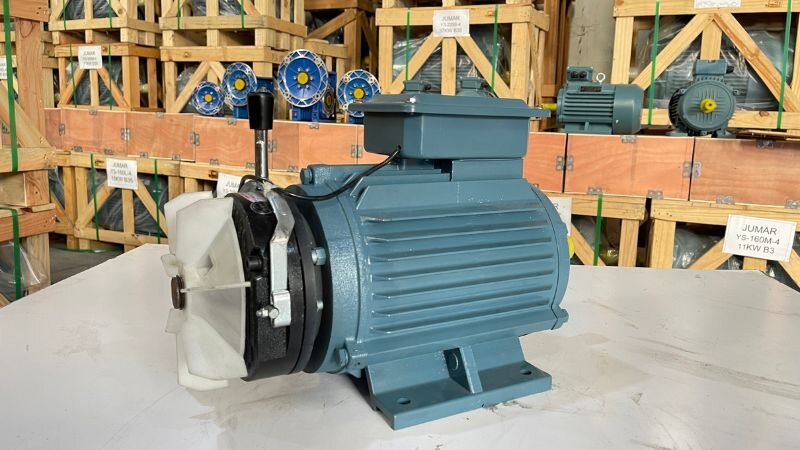
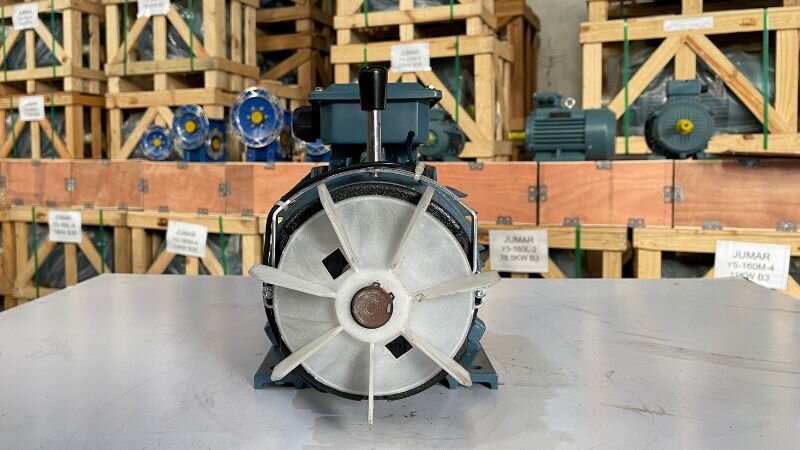
A brake motor is an electric motor integrated with an electromagnetic brake system to quickly stop the rotating shaft during a power outage or in an emergency stop. These types of brake motors are commonly used in systems requiring high stopping precision such as elevators, overhead cranes, conveyors, and lifting machines. The electromagnetic brake operates automatically to ensure safety and enhance motion control. Thanh Thai Motor specializes in providing a wide range of high-quality brake motors to meet various industrial needs.
What is a brake motor?
Structure of an Electromagnetic Brake Motor
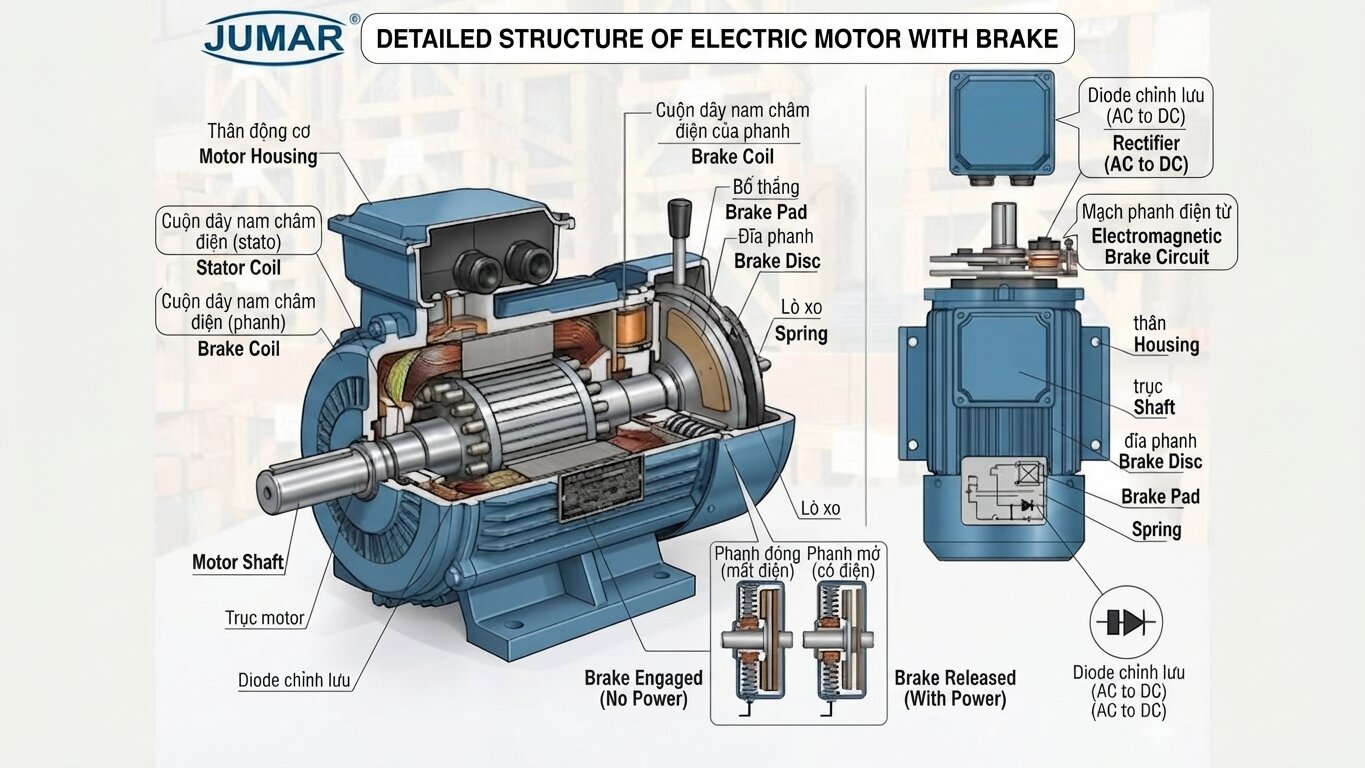
Braked electric motors consist of standard electric motor components and an electromagnetic brake assembly. The detailed structure of the brake motor is as follows:
Motor Housing (Stator and Rotor): The main part that generates rotational movement.
Electromagnetic Coil (Brake Coil): A copper coil wound around a steel core. When energized, it generates a strong magnetic field to attract the metal plate and release the brake.
Brake Pad (Friction Lining): The part that creates friction to brake the rotating shaft. The surface of the brake pad is made of high-friction material with good wear resistance.
Spring: Creates mechanical pressure to push the brake pad tightly against the shaft when unpowered.
Brake Disc (Flange): Attached to the motor shaft, serving as the surface for the brake pad to press against.
Rectifier Diode: Found only in DC brakes, used to convert AC power from the supply into DC power for the brake coil.
Motor Shaft: Specially designed to connect with both the rotor and the brake disc.
Detailed structure of the brake motor
Operating Principle of the Brake Motor
The operating principle of the brake motor is based on the interaction between magnetic force and the mechanical force of the spring. This is a reliable safety mechanism trusted by many when purchasing an electric motor.
When energized: Electric current flows into both the motor winding and the electromagnetic brake coil. The brake coil generates a strong magnetic field, pulling the metal plate (attached to the brake pad) toward itself, overcoming the spring’s pushing force. At this point, the brake pad is released, eliminating friction with the brake disc and allowing the motor shaft to rotate freely. The motor operates like a normal electric motor.
When de-energized: The current supplied to the motor and brake is cut off. The magnetic field in the brake coil instantly disappears. The elastic force of the spring takes over, forcefully pushing the brake pad tightly against the brake disc. Tremendous friction is created, braking the rotating shaft and causing the motor to stop immediately, completely eliminating inertia.
Classification of Brake Motors
Classification by Phase
3-Phase Brake Motor: Uses 380V industrial power, powerful capacity, and fast, accurate deceleration capabilities. Commonly applied in lifting equipment, industrial machinery, and large automation systems.
3-Phase Brake Motor
Classification by Power Output
Brake Motor Below 3.7kW: A compact, small-capacity motor used in medium-load systems requiring speed control and precise stopping. Suitable for press machines, shaping machines, semi-automatic production lines, etc.
Brake Motor Above 3.7kW: A large-capacity motor used for heavy industrial applications requiring high braking force and fast stopping times. It meets the demand for stable, continuous operation in large-scale manufacturing plants.
Technical Specifications to Note When Purchasing a Brake Motor
To choose the right motor, you need to pay attention to the following technical specifications. These parameters also directly affect the motor price.
Power (HP/kW): Choose the appropriate power for the application’s load. We have a variety of affordable to high-end electric motors with full power ranges.
Voltage: Common options include 3-phase brake motors (380V) and some 220V electric brake motors for residential and light industrial applications.
Ratio: If you need a brake motor, the gear ratio is a decisive factor for the output speed.
Torque: Especially important for lifting applications that require high starting torque.
Mounting Type: Foot mount (B3) or flange mount (B5, B14); choose correctly to ensure compatibility with machinery.
Frequently Asked Questions
How to adjust the play of the electromagnetic brake when the brake pad is worn?
After a period of operation, the brake pad will wear out, increasing the gap between the brake disc and the electromagnet, leading to brake slippage or failure. Customers need to adjust the locking nuts at the rear of the brake to bring the gap to the standard level (usually 0.2mm to 0.5mm depending on capacity). Adjusting it too tightly will cause brake binding and motor overheating; while too loose will prevent the brake from releasing when energized.
Why do brake motors frequently experience brake coil burnout?
The main cause is unstable power supply to the brake or a damaged rectifier, causing incorrect voltage applied to the coil (e.g., supplying AC instead of DC). Additionally, if the motor operates with excessively frequent switching cycles, the brake coil will not dissipate heat in time, leading to insulation burnout.
What should be noted when connecting power to an electromagnetic brake motor?
There are 2 common wiring methods: Connect the brake power directly to the motor terminal (the brake automatically releases when the motor runs) or connect an independent brake power supply (for more active brake control). The most important note is to check the voltage of the brake coil (usually 90VDC or 190VDC). Never connect 220V/380V AC power directly to the brake coil without a rectifier, as it will cause immediate brake burnout.
Customers can visit the electric motor video collection page to watch wiring tutorial videos, practical product reviews, and monthly product pricing conducted by the Thanh Thai Motor team.