Table of Contents
Overview of Pulleys over 50mm
Pulleys over 50mm are specially designed to meet drive requirements in industrial systems with heavy loads and continuous working conditions. With a larger size, the product is capable of transmitting stable torque, reducing belt slip, and ensuring high operating efficiency throughout use. Thanks to being manufactured from materials with good mechanical strength such as cast iron, steel, or alloy, Pulleys over 50mm have good load-bearing capacity, limit deformation, and increase the lifespan of the entire drive system. This is a suitable choice for applications requiring high stability, durable operation, and safety in heavy industrial environments.
Operating Principle of Pulleys over 50mm
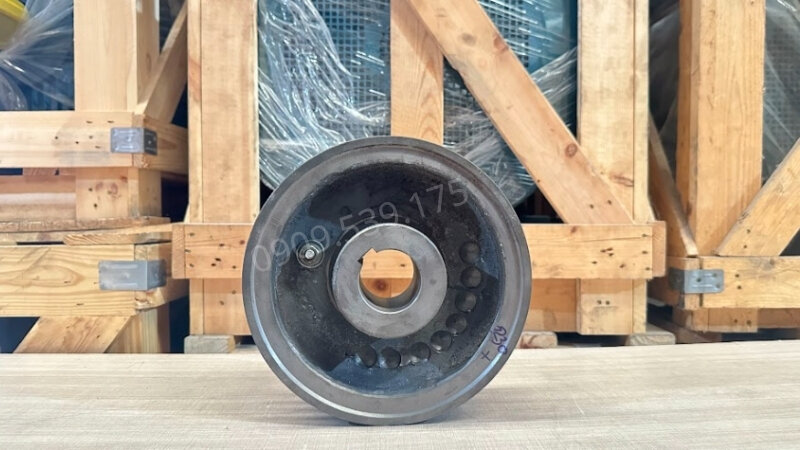
Pulleys over 50mm operate based on the principle of transmitting rotary motion through belts between the driving pulley and the driven pulley. When the motor rotates, the pulley mounted on the shaft pulls the belt into motion, thereby transmitting force and torque to the downstream machinery parts.
With a larger diameter, Pulleys over 50mm help adjust the appropriate transmission ratio for heavy-duty systems while increasing operational stability at low speeds or high torque. Transmission efficiency depends on belt tension, concentricity between pulleys, and the machining accuracy of the pulley grooves during operation.
Structure of Pulleys over 50mm
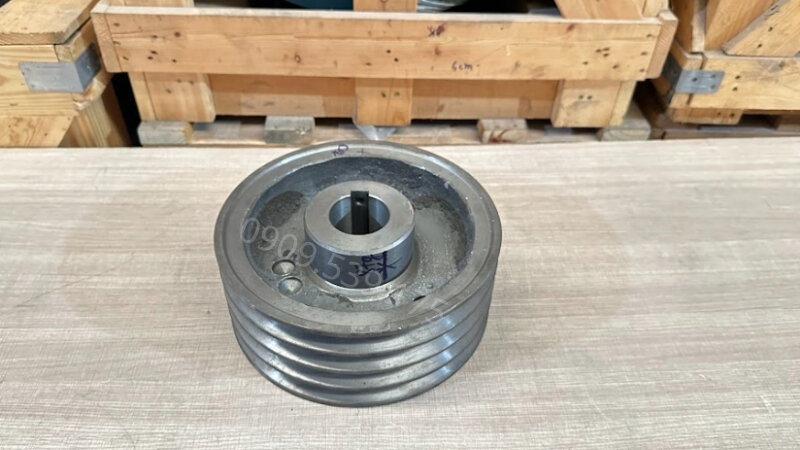
Basically, Pulleys over 50mm have a structure that does not differ much from larger pulley lines, differing mainly in overall dimensions and drive capabilities suitable for specific installation spaces. The components are still designed according to general principles to ensure stable and accurate power transmission capability.
- Pulley body: The main part of the pulley, usually made of cast iron, steel, or aluminum, ensuring durability and load-bearing capacity when rotating.
- Pulley groove: Machined according to belt standards, helping to increase grip and ensure stable transmission.
- Bore (center hole): Where the pulley is installed onto the drive shaft or motor shaft.
- Pulley hub: Connects the pulley body and the shaft, helping to fix it securely during operation.
Applications of Pulleys over 50mm
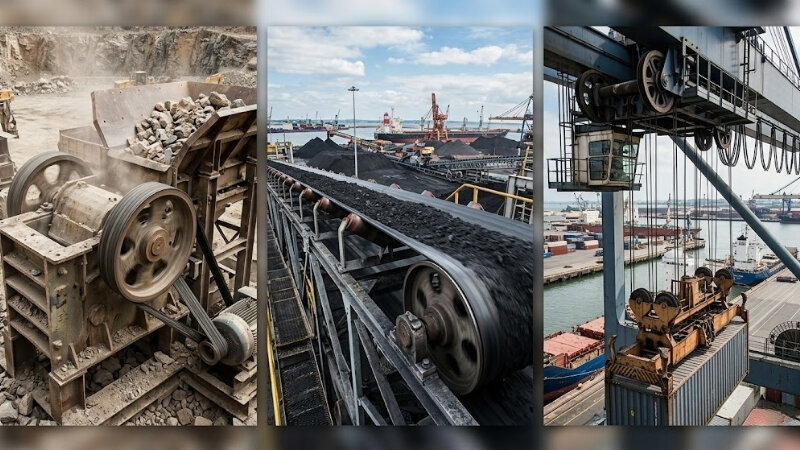
Pulleys with a diameter of over 50mm are commonly used in transmission systems requiring heavy loads, high durability, and stable operation in industrial environments.
Industrial Crushers
Pulleys are installed in crushers to transmit drive from the electric motor to the crusher shaft via belts. Thanks to their large size and sturdy structure, pulleys help ensure high transmission efficiency, reduce belt slip, and increase equipment lifespan.
High-Capacity Conveyor Systems
In large-scale conveyors, pulleys play a role in guiding and transmitting power to the conveyor belt. The equipment helps control stable movement, optimizes cargo transportation capacity, and limits wear and tear during continuous operation.
Craning and Hoisting Systems
Pulleys are used in cranes and heavy-duty hoisting mechanisms. Thanks to their good load-bearing capacity, pulleys support proper force distribution, helping the process of lifting, lowering, and moving loads take place safely and efficiently.
Updated Prices for Pulleys over 50mm at Thanh Thai Motor
Below is the latest updated list of Prices for Pulleys over 50mm with various sizes to help customers easily refer and choose according to actual transmission needs.
Criteria for Choosing Pulleys over 50mm
To select suitable Pulleys over 50mm for your transmission system and ensure long-term operational efficiency, customers should consider the following important criteria:
- Pulley diameter matching transmission ratio: It is necessary to correctly determine speed and torque requirements to choose the appropriate pulley size for the system.
- Type of belt used: The pulley must be compatible with the belt type (V, B, C, or timing belt) to ensure grip and stable power transmission.
- Manufacturing material: Prioritize cast iron, steel, or aluminum alloy depending on the load and working environment to ensure durability and load-bearing capacity.
- Machining accuracy of pulley grooves: Grooves must meet standards to avoid belt slippage and reduce wear during operation.
- Concentricity during installation: Pulleys must be installed concentrically with the shaft to limit vibration, reduce noise, and increase system lifespan.
- Load capacity and rotational speed: It is necessary to choose a pulley that matches the motor capacity and actual operating conditions to ensure safety.
For a more intuitive view of product lines, customers can check out additional summary videos of pulley categories featuring various practical models, making it easy to evaluate and choose the right type of pulley for your usage needs.
Frequently Asked Questions [FAQ]
Do Pulleys over 50mm need alignment during installation?
Yes. Concentric alignment between pulleys helps reduce vibration, minimize belt wear, and increase system lifespan.
Where to buy reputable Pulleys over 50mm?
Thanh Thai Motor currently supplies various lines of Pulleys over 50mm with diverse sizes, supporting selection based on shaft diameter and actual transmission ratio.
Should you choose a single-groove or multi-groove pulley?
Depending on the capacity and load used. High-capacity systems typically use multi-groove pulleys to increase power transmission capacity and reduce belt slippage.

From 2.250.000₫

From 2.500.000₫

From 3.050.000₫

From 3.500.000₫

From 3.950.000₫

From 4.300.000₫

From 5.000.000₫