Siemens Variable Frequency Drives are leading power electronic devices used to control the speed and torque of electric motors, optimizing performance and saving energy. As a core variable frequency drive product from Siemens AG (Germany) – one of the world’s largest industrial and technology corporations, Siemens variable frequency drives are renowned for advanced technology, exceptional durability, high integration capability, and absolute precision.
The equipment is widely applied in various fields such as conveyor systems, water pumps, industrial fans, automated production lines, air compressors, and control systems in modern factories. Thanks to stable operation and flexible motor speed control, Siemens variable frequency drives help reduce power consumption, limit mechanical wear, and enhance operational efficiency for the entire system.
Overview of Siemens variable frequency drives
Structure of Siemens Variable Frequency Drives
Siemens variable frequency drives are designed with a modern modular structure, integrating multiple functional blocks to control electric motors accurately, stably, and optimize operating efficiency in industrial environments.
Input power block: Receives power from the system and provides electricity for the entire Siemens variable frequency drive to operate stably.
Rectifier unit: Responsible for converting AC alternating current into DC direct current before passing it to the power processing circuit.
Intermediate DC link: Helps stabilize voltage, store energy, and reduce noise during heavy-load operation.
Power inverter block: Generates a new AC power source with flexibly variable frequency to control the rotation speed of the electric motor according to actual needs.
Central control circuit board: Plays the role of signal processing, managing speed, current, voltage, and protection functions of the Siemens variable frequency drive.
Cooling system: Includes cooling fans and heat dissipation slots to help the device operate stably for a long time and limit overheating.
Control panel and connection ports: Supports users in setting parameters, monitoring operating status, and connecting with PLCs, HMIs, or industrial automation systems.
Structure of Siemens variable frequency drives
Operating Principle of Siemens Variable Frequency Drives
Siemens variable frequency drives operate based on transforming and adjusting the current frequency to control the rotation speed of electric motors according to specific system requirements. First, the input AC alternating current is rectified into DC direct current. Then, through the inverter unit, this current is regenerated back into AC with flexibly variable frequency, thereby determining the fast or slow operating speed of the motor.
During operation, the control system continuously monitors load status and operating parameters to automatically make appropriate adjustments, helping the motor run more stably, reducing energy waste, and increasing durability for the equipment.
Classification of Siemens Variable Frequency Drives at Thanh Thai Motor
Siemens variable frequency drives are classified based on power ranges, meeting the diverse needs of specific applications:
Siemens Variable Frequency Drives under 10kW
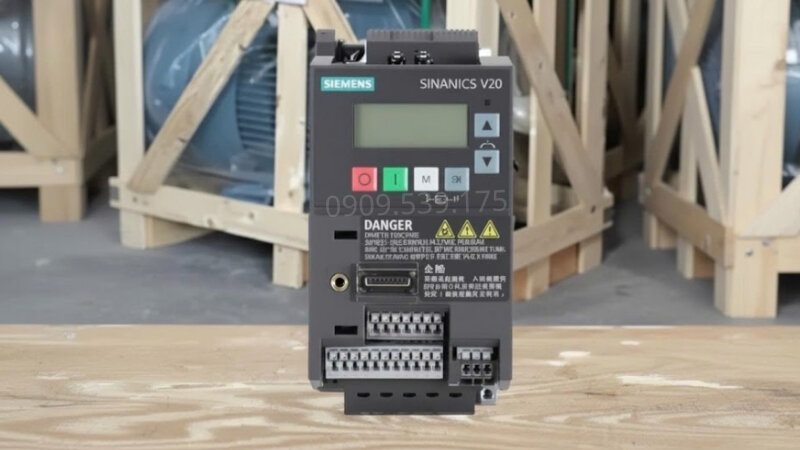
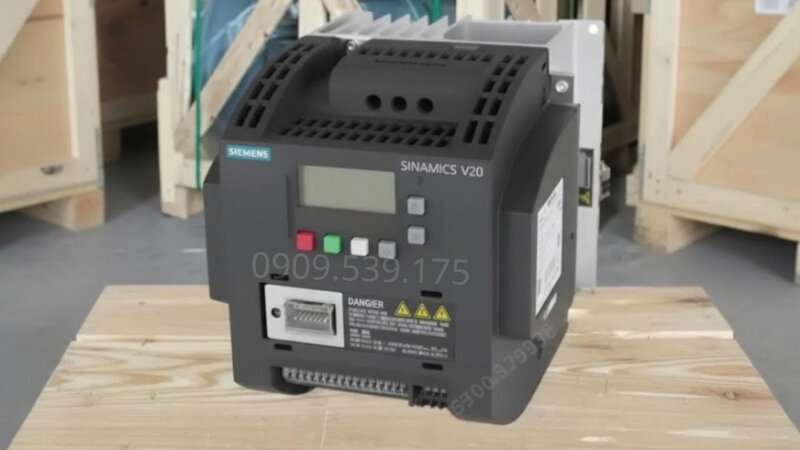
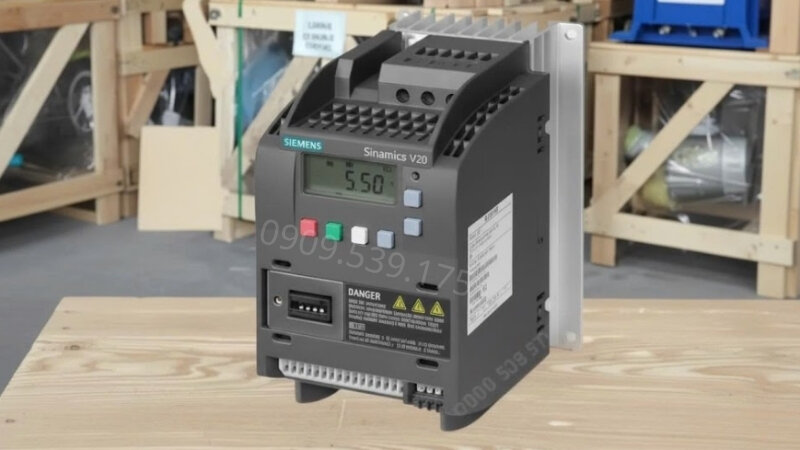
Siemens variable frequency drives under 10kW feature a compact design, easy installation, and are suitable for light to medium load systems. The equipment still ensures the characteristic stability, energy savings, and high performance of Siemens, and is commonly applied in packaging machines, labeling machines, small conveyors, ventilation fans, automatic doors, small machine tools, civil and light industrial water pumps, as well as basic automation systems.
Siemens variable frequency drives under 10kW
Siemens Variable Frequency Drives over 10kW
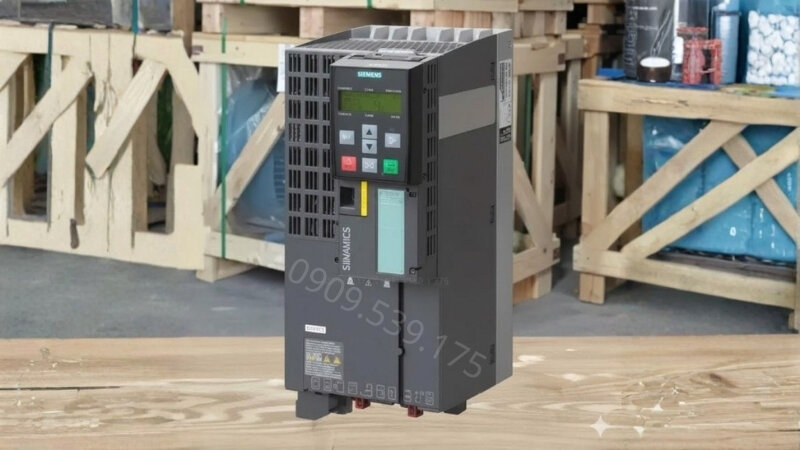
Siemens variable frequency drives over 10kW are designed for heavy-duty industrial systems, requiring large capacity and continuous stable operation. The device integrates many advanced control features to optimize performance and ensure high operating accuracy, commonly used in air compressors, large water pump systems, industrial fans, production lines, crushers, rolling mills, plastic injection molding machines, cranes, elevators, industrial robots, and CNC machines.
Siemens variable frequency drives over 10kW
Siemens Variable Frequency Drives Price at Thanh Thai Motor
Below is the latest updated Siemens Variable Frequency Drives Price list at Thanh Thai Motor with various power ranges from small to large, suitable for pump, fan, conveyor applications, and industrial automation systems.
Criteria for Selecting Siemens Variable Frequency Drives
To choose a suitable Siemens variable frequency drive, ensuring stable system operation and high performance, users should consider the following important criteria:
Suitable power: Choose the correct Siemens variable frequency drive power compatible with the motor to ensure stable operation and avoid overload.
Type of load: Clearly define applications such as water pumps, fans, conveyors, or air compressors to choose the right model.
Input power supply: Check the 1-phase or 3-phase electrical system to choose a compatible model.
Installation environment: Prioritize equipment suitable for dusty, humid, or high-temperature environments in workshops.
Control features: Choose according to needs such as speed control, PID, or automation connectivity.
Supplier: Choose a reputable place to ensure full technical support and warranty.
Customers can view more videos in the variable frequency drive video category compilation to learn about various product lines, as well as update technical instructions and selection methods suitable for each operating system.
Frequently Asked Questions [FAQ]
What are the prominent advantages of Siemens variable frequency drives?
The strengths are precise control capabilities, high stability, low error rates, and good load-bearing capacity in industrial systems.
Can Siemens variable frequency drives be used for water pumps?
Yes. This is one of the most common applications that help control water pressure stably and protect pump systems.
Do Siemens variable frequency drives get hot during operation?
They may get slightly warm during continuous operation, but overheating is usually caused by dust, weak cooling fans, or installation in enclosed environments.