


Table of Contents
1-Phase Gear Motor Definition
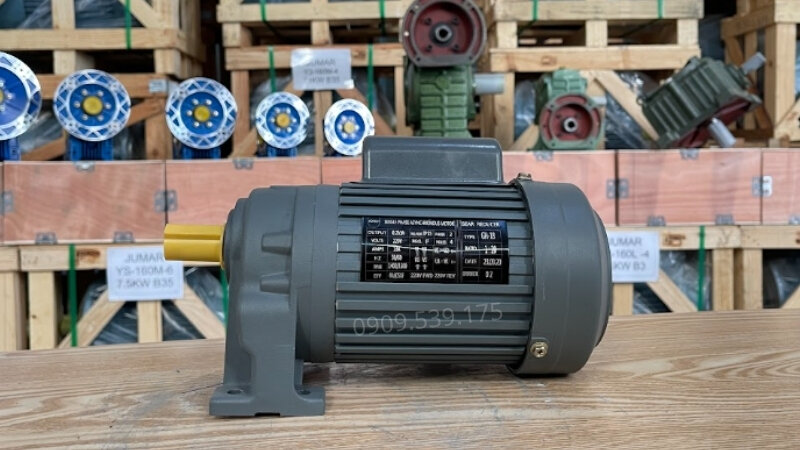
Widely used in conveyor systems, agitators, and mechanical production lines, a gear motor effectively reduces rotational speed and increases pulling force. A 1-phase gear motor (also known as a single-phase gear motor) is a device that integrates a 1-phase electric motor and a gearbox, ensuring stable power transmission across various practical applications. This type of gear motor operates on a 220V power supply with a power range from 0.2kW to 2.2kW, making it ideal for systems requiring precise speed control without needing a 3-phase power supply.
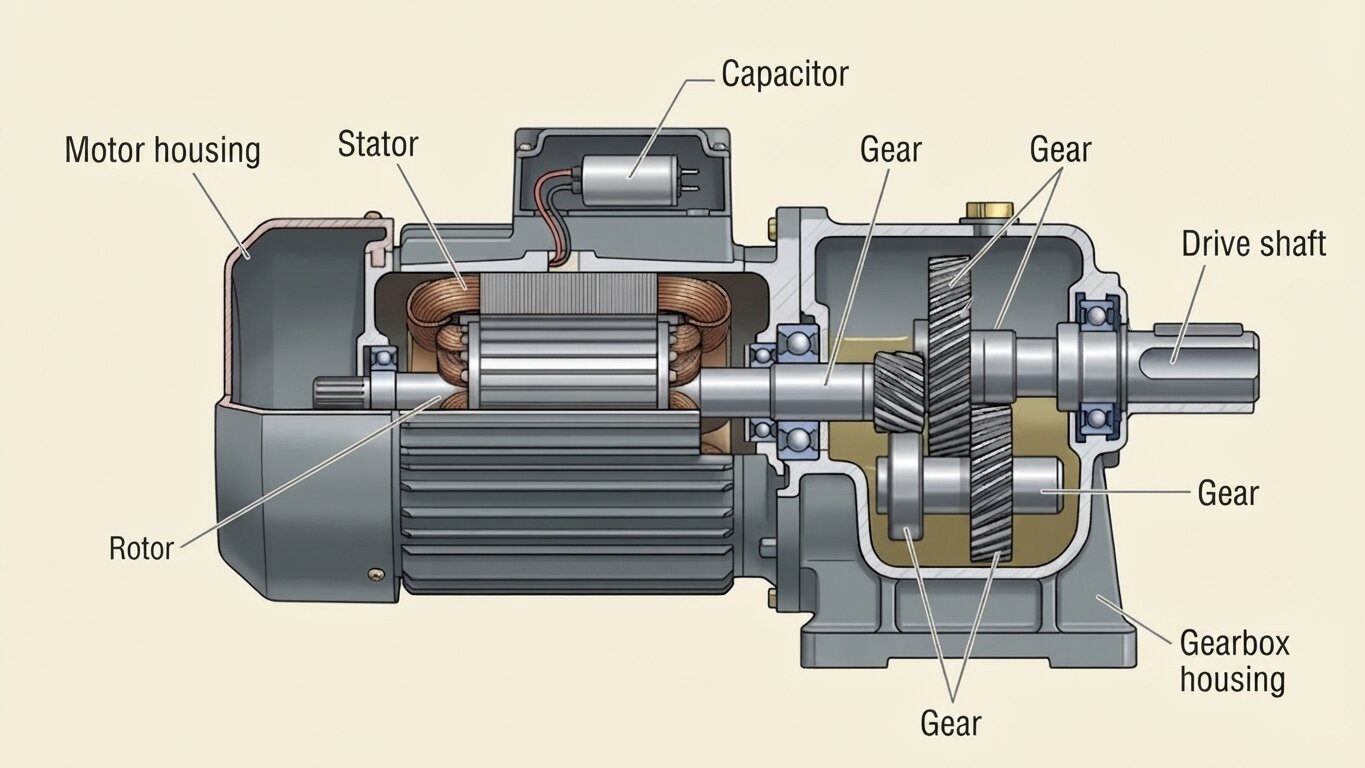
Structure of a 1-Phase Gear Motor
A 1-phase gear motor is designed from various components that work synchronously to generate stable movement, reduce rotational speed, and increase pulling force during operation.
- Stator (stationary part): Consists of copper windings wound on electrical steel cores. When supplied with 220V power, the stator creates a magnetic field for the gear motor to operate.
- Rotor (rotating part): Placed inside the stator and typically features a squirrel-cage design. The rotor rotates under the influence of the magnetic field, generating mechanical movement for the motor.
- Capacitor: Responsible for assisting startup and maintaining stable operation for the 1-phase electric motor by creating a phase shift in the current.
- Motor housing: Typically made of cast iron or aluminum, protecting internal components while supporting heat dissipation during operation.
- Reduction gear: Comprises multiple gears of various sizes and transmission ratios, helping reduce the motor’s rotational speed and increase output torque.
- Drive shaft: Transmits movement from the motor to the gearbox and out to the operating equipment, ensuring stable and uniform machine operation.
- Gearbox housing: Manufactured from cast iron or hard alloy to protect the internal gear system, increase load-bearing capacity, and enhance equipment durability.
Operating Principle of a 1-Phase Gear Motor
A 1-phase gear motor operates by combining an electric motor and a gearbox to produce rotational movement with low speed but higher pulling force.
When supplied with 220V power, the electric motor starts operating and generates high-speed rotational movement. This movement is then transmitted through the internal gear system within the gearbox. Here, the gears reduce the rotational speed of the motor according to the designed transmission ratio while increasing the output torque. As a result, the motor can operate more powerfully, suitable for equipment requiring heavy loads or slow rotational speeds.
Depending on each type of gearbox and transmission ratio, a 1-phase gear motor can be applied in conveyors, agitators, packaging machines, rolling doors, lifting systems, and various other mechanical equipment.
Classification of 1-Phase Gear Motors
Classification by Product Line
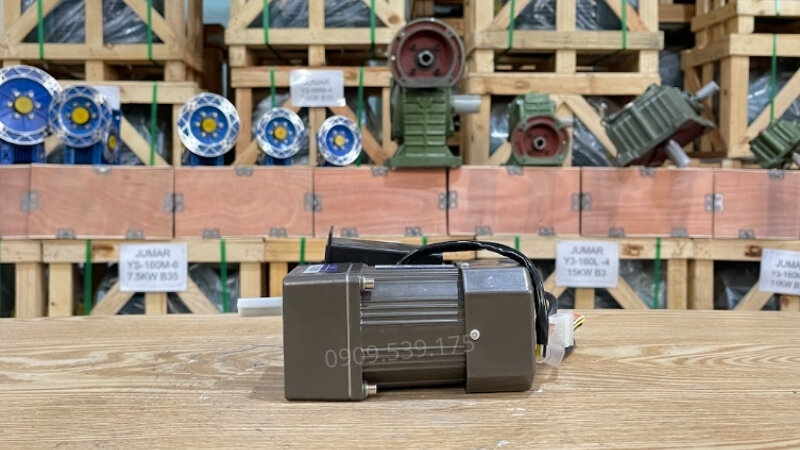
Mini 1-phase gear motor: This is a compact, lightweight motor line that is easy to install in confined spaces. The equipment is commonly used for mini conveyors, packaging machines, small agitators, automatic doors, or civil mechanical systems requiring slow rotational speed and stable operation.
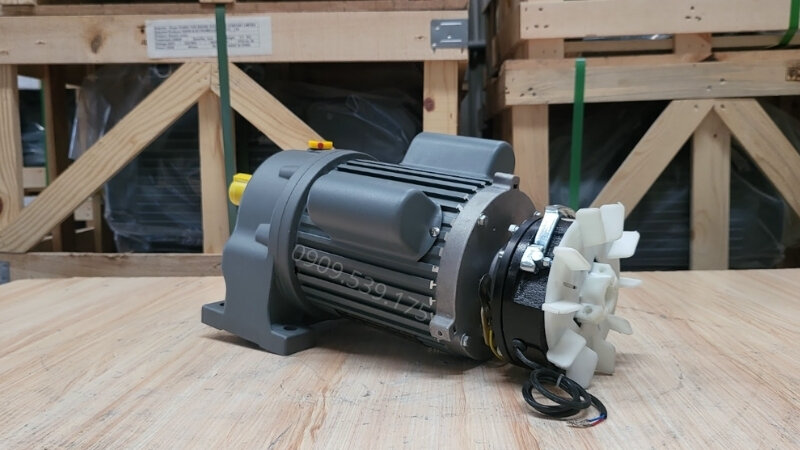
Brake 1-phase gear motor: This motor line is integrated with an electromagnetic brake to help stop quickly when power is cut, increasing safety and control during operation. It is commonly applied in lifting machines, inclined conveyors, packaging systems, or equipment requiring precise positioning stops.
NMRV 1-phase gear motor: This is a gear motor line utilizing a square aluminum housing gearbox with a compact, modern design and easy installation. The NMRV 1-phase gear motor operates smoothly, provides good vibration reduction, and is commonly used in conveyors, packaging machines, food processing machines, or small automation systems.
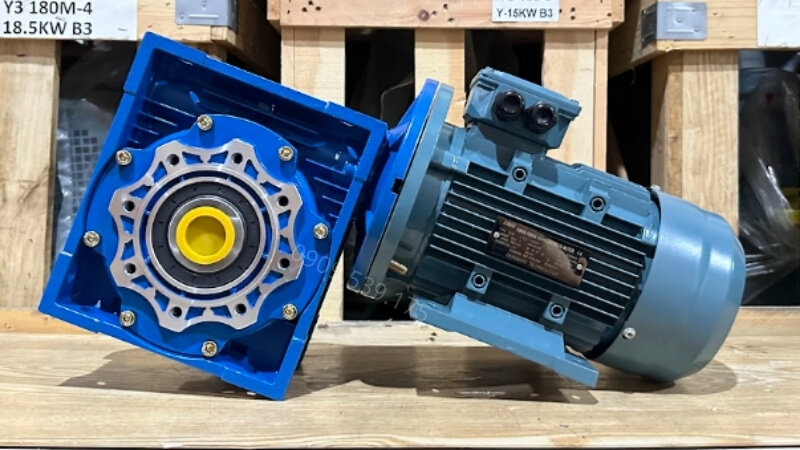
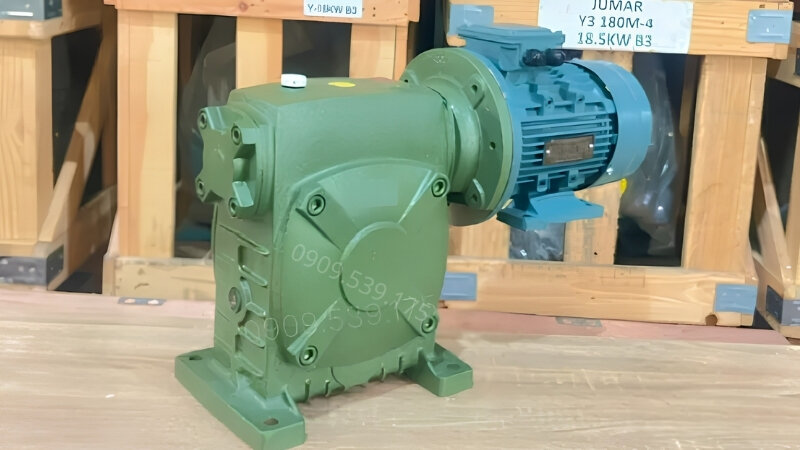
Worm gear 1-phase gear motor: Operates based on the transmission mechanism between a worm shaft and worm gear, helping effectively reduce rotational speed and generate high torque. This motor line offers the advantages of stable operation, low noise, and good self-locking capability, making it suitable for lifting machines, conveyors, agitators, and many other industrial mechanical applications.
Classification by Power Capacity
1-phase gear motor under 1.1kW: A small-capacity motor group with low power consumption and relatively quiet operation. This line is suitable for light-load equipment such as food mixers, roasters, agricultural processing machines, mini conveyors, or small drive systems.
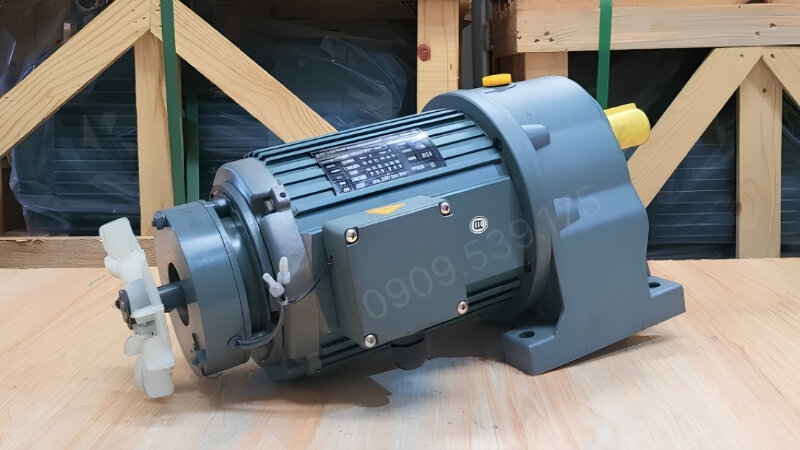
1-phase gear motor from 1.1kW to 3.7kW: Capable of more powerful operation, well-meeting systems requiring high torque and continuous operation. Commonly used in production lines, industrial agitators, cargo conveyors, woodworking machines, or light industrial mechanical systems.
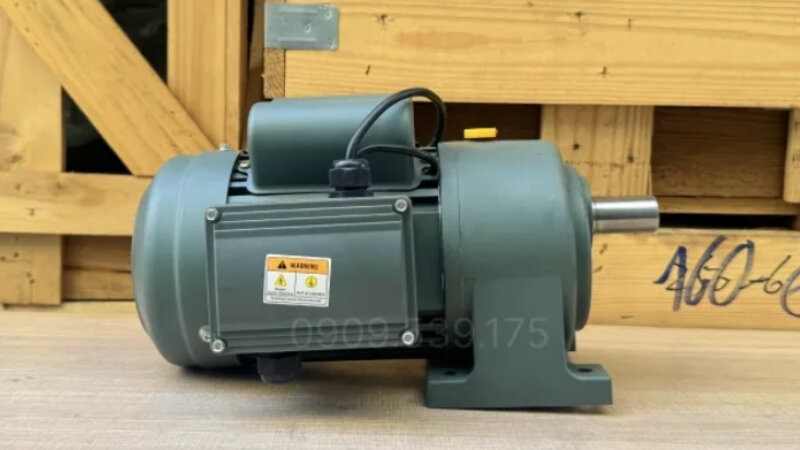
1-phase gear motor above 3.7kW: A high-capacity motor line suitable for systems requiring heavy loads and continuous operation such as conveyors, industrial mixers, production lines, or high-torque mechanical equipment.
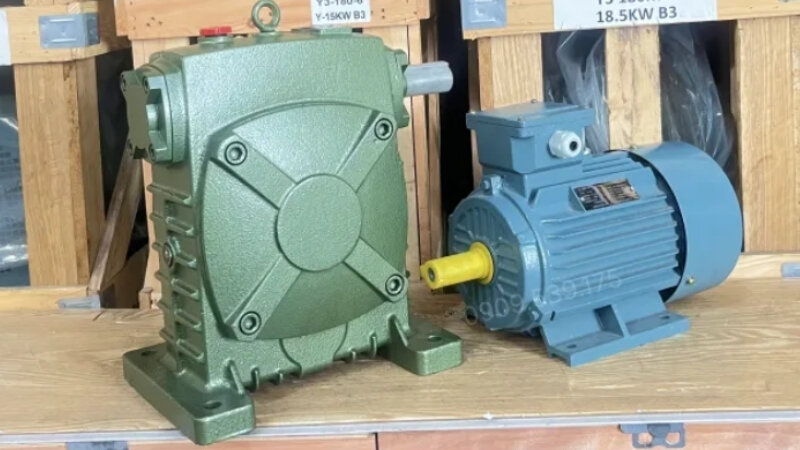
1-Phase Gear Motor Price at Thanh Thai Motor
Below is the latest 1-phase gear motor price list at Thanh Thai Motor updated in 10/2026 with various power ranges and mounting styles, making it convenient for customers to reference and choose according to their actual usage needs.
Notes When Purchasing a 1-Phase Gear Motor
To select the right 1-phase gear motor for your usage needs, users should carefully consider technical factors and actual operating environments.
- Determine load capacity and usage needs: Calculate the load, rotational speed, and operating time of the equipment to choose a motor with suitable power and transmission ratio, avoiding overload or inefficient operation.
- Select the appropriate transmission ratio: The transmission ratio directly affects the output speed and pulling force of the motor. If slow rotation and heavy loads are required, a large transmission ratio should be chosen to increase torque.
- Check gearbox material and durability: Prioritize gearbox lines with cast iron housings, hardened steel gears, and copper-wound motors to increase durability, load-bearing capacity, and long-term stable operation.
- Pay attention to voltage and mounting style: A 1-phase gear motor uses 220V electricity, making it suitable for residential power supplies. Additionally, check the foot-mounted, flange-mounted, or hollow shaft installation style to match the existing machinery system.
- Prioritize brand and warranty policy: Choosing products from reputable suppliers ensures quality, easy replacement of components, and technical support during use.
Customers can refer to the video compilation in the Thanh Thai Motor gear motor video category to see the actual structure, operational capability, and applications of each product line.
Frequently Asked Questions [FAQ]
Can a 1-phase gear motor handle heavy loads?
The motor can still pull loads well thanks to the gearbox supporting increased torque. However, for excessively large loads or continuous industrial operation, the 3-phase line is generally more suitable.
Does a 1-phase gear motor generate noise?
When operated according to technical standards, the motor runs quite stably and noise levels are not too high. However, if the gearbox lacks oil or the bearings are worn, the noise may increase.
How often should a 1-phase gear motor be maintained?
Depending on the frequency of use, users should inspect the gearbox oil and clean the motor periodically every 3-6 months to ensure stable and long-lasting equipment operation.

From 1.900.000₫

From 3.500.000₫

From 4.200.000₫

From 2.000.000₫

From 2.500.000₫

From 3.300.000₫

From 2.000.000₫

From 6.000.000₫

From 5.200.000₫

From 1.500.000₫

From 2.100.000₫

From 2.400.000₫

From 4.950.000₫

From 2.900.000₫

From 3.300.000₫

From 9.600.000₫
From 5.000.000₫

From 6.150.000₫

From 11.900.000₫

From 12.600.000₫