


What are Shaft Couplings?
Shaft couplings are important mechanical devices in drive systems, functioning to connect two rotating shafts and ensure a stable torque transmission process between the gearbox and the electric motor. Specifically, shaft couplings are designed to adapt to various working conditions, allowing for small misalignments between shafts while reducing vibration and limiting the impact of loads on the system. Thanks to their sturdy structure, high durability, and reliable operation, shaft couplings are widely applied in machinery systems and industrial production lines.
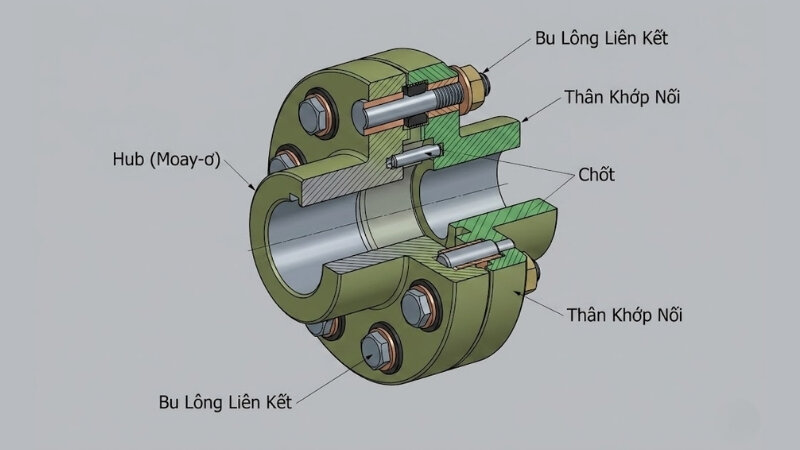
Operating Principle of Shaft Couplings
Shaft couplings operate based on the principle of transmitting torque from the driving shaft to the driven shaft, helping the two shafts rotate synchronously within the same drive system. When the motor shaft rotates, this motion is transmitted through the coupling to the other shaft, ensuring continuous and stable machinery operation. During operation, shaft couplings also have the ability to compensate for small misalignments between the two shafts such as parallel, angular, or thermal expansion misalignments, depending on the design type. In elastic coupling lines, damping elements help absorb vibration and reduce shock loads, thereby increasing smoothness and extending the lifespan of the entire drive system.
Common Classifications of Shaft Couplings
Based on the installation shaft diameter and actual usage needs, shaft couplings at Thanh Thai Motor are classified into groups to meet diverse industrial transmission requirements.
Shaft couplings under 50mm
Shaft couplings under 50mm are compact product lines designed for low to medium-power drive systems. Thanks to their simple design, easy installation, and reasonable cost, these products are frequently used in light mechanical equipment, small machinery, mini conveyors, and systems requiring limited installation space. Despite their small size, the couplings still ensure stable power transmission and reduce basic misalignments between shafts.
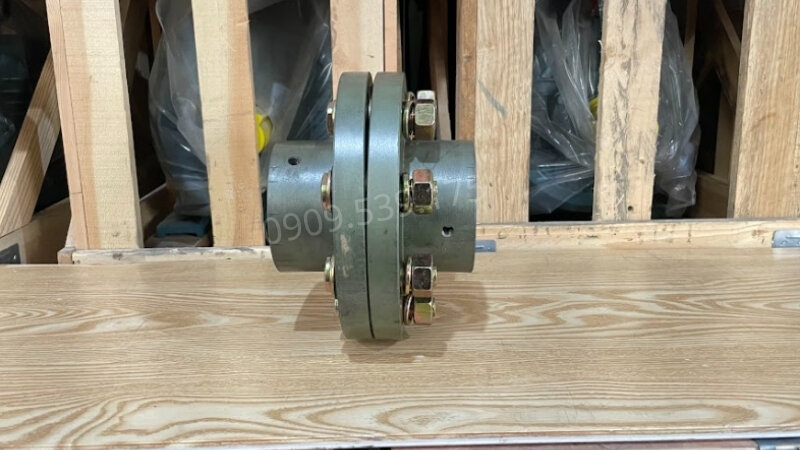
Latest Shaft Coupling Prices at Thanh Thai Motor
Below are updated shaft coupling prices at Thanh Thai Motor with a variety of sizes, materials, and designs, suitable for many different mechanical drive systems.
Criteria for Choosing Shaft Couplings
To choose the right shaft couplings for your drive system and ensure long-term operating efficiency, customers should consider the following important criteria:
- Transmitted torque: It is necessary to correctly determine the torque of the system to select a coupling with suitable load capacity, avoiding overload causing damage.
- Shaft diameter (installation dimensions): The coupling must be precisely compatible with the motor shaft and machine shaft diameters to ensure secure installation.
- Suitable coupling type: Depending on usage needs, rigid couplings, flexible couplings, or elastic couplings can be chosen to meet vibration reduction or misalignment compensation requirements.
- Shaft misalignment compensation capacity: Priority should be given to types capable of compensating for parallel, angular, or thermal expansion misalignments to increase operational stability.
- Manufacturing material: Cast iron, steel, or aluminum alloy will be selected depending on the working environment and load level.
- Working rotational speed: It is necessary to ensure the coupling meets the rotational speed of the system to avoid shaking or operational unsafety.
- Environmental conditions: In dusty, humid, or high-temperature environments, types with good durability and corrosion resistance should be chosen.
Customers can also refer to additional shaft couplings videos in the comprehensive video section to practically observe many product models, thereby easily choosing the right type for their usage needs.
Frequently Asked Questions About Shaft Couplings [FAQ]
Why use shaft couplings?
Because they help reduce shock loads, limit damage to bearings and motors, and increase the durability of the entire drive system.
Do shaft couplings wear out?
Yes. Over time, parts such as rubber elements, teeth, or elastic discs can wear out and need replacement.
Do shaft couplings cause noise?
If installed correctly according to technical standards, they operate smoothly. Noise typically occurs when there is wear, shaft misalignment, or incorrect installation.


