


3-Phase Borehole Pumps are submersible borehole pumps using a 3-phase power supply, designed to operate underwater and extract water from great depths. With a powerful motor, sturdy structure, and the ability to work continuously for a long time, these borehole water pumps are chosen by many customers when they need highly stable equipment. In addition, this water pump line also has many different power levels, making it easy for users to choose according to the desired flow rate and head.
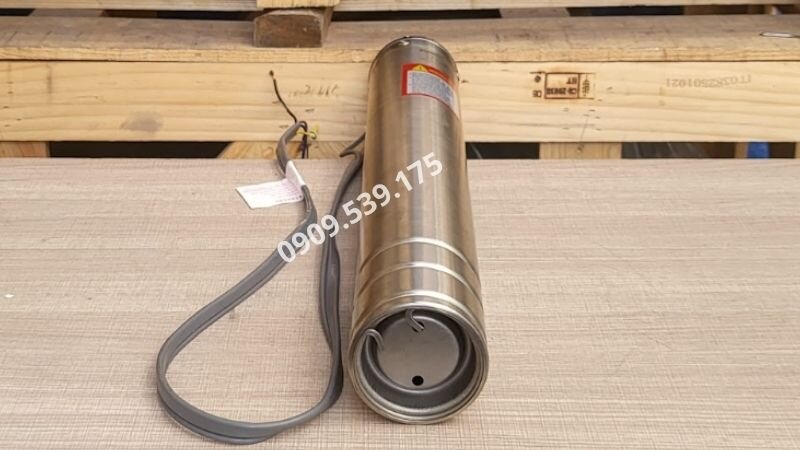
Applications of 3-Phase Borehole Pumps
- Extracting water from deep boreholes: 3-Phase Borehole Pumps are installed directly in boreholes to bring water from underground water tables to the ground surface. This is the most common application of this pump line.
- Water supply for production areas: Many factories and workshops use borehole water pumps to provide water sources for daily operations. The machine can operate continuously for a long time while maintaining a stable flow rate.
- Agricultural irrigation systems: On farms or large cultivation areas, pumps are used to draw water from boreholes and deliver it to crop watering systems. Water supply becomes faster and more stable.
- Residential water supply: The pumps are often installed in centralized water supply systems to exploit groundwater for daily life. Water is continuously delivered to storage tanks or distribution systems.
- Supporting livestock farming systems: Livestock farms often use borehole pumps to supply water for daily cleaning, cooling, and livestock care activities.
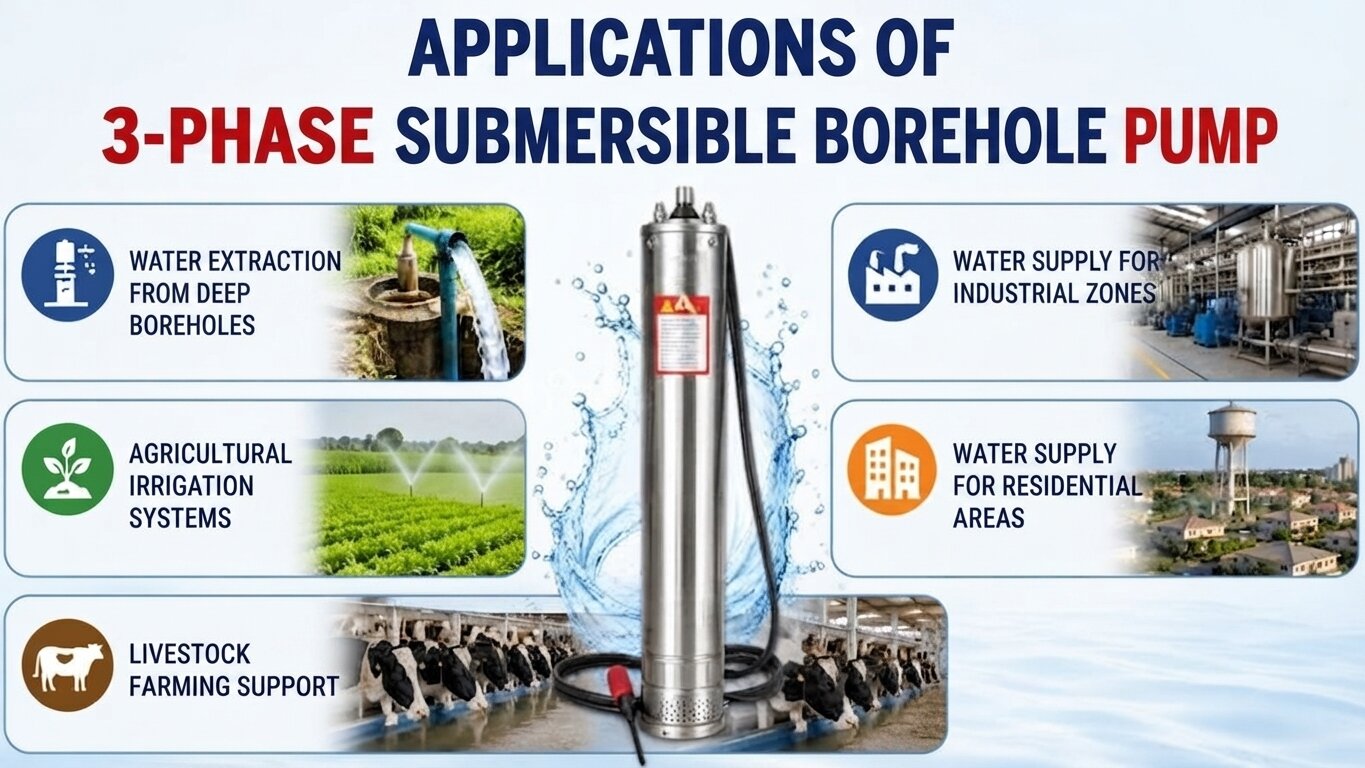
Advantages of 3-Phase Borehole Pumps
- Stable operation over long periods: 3-phase motors are capable of working continuously with high stability. This is suitable for places requiring frequent water extraction.
- Ability to pump from great depths: The machine is specially designed for boreholes, so it can draw water from deep positions that many conventional pumps cannot meet.
- Strong water flow rate: During operation, the water volume is stably maintained, helping to limit weak or uneven water flow.
- Compact structure, underwater installation: The machine is placed directly in the borehole, so it does not take up much external space. The installation area is also neat and easier to arrange.
- Sturdy pump casing, high durability: Many borehole pump models are manufactured from stainless steel or anti-corrosive materials, suitable for long-term underwater working environments.
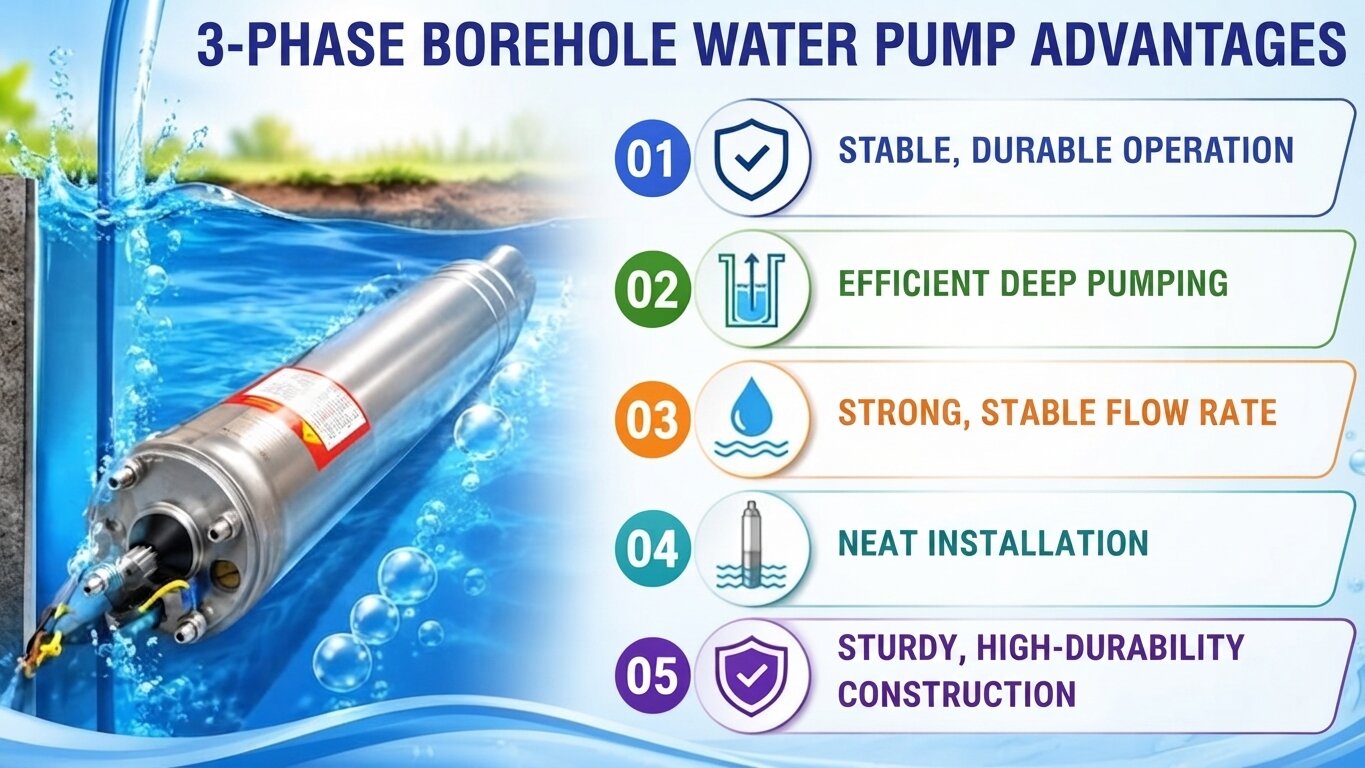
Price of 3-Phase Borehole Pumps at Thành Thái Motor
Customers can refer to the price list below to easily choose 3-Phase Borehole Pumps that suit the borehole depth, required water flow rate, and actual operating conditions.
Criteria for Buying 3-Phase Borehole Pumps
- Determine the depth of the borehole: This is an important criterion to choose the appropriate head. If chosen incorrectly, the machine may not deliver water as expected.
- Choose the water flow rate: Depending on the amount of water needed each day, choose the appropriate pump power and flow rate. This helps avoid wasting investment costs.
- Check the borehole diameter: Not every pump fits all types of wells. Users should measure the well dimensions before choosing to buy the product.
- Pump body material: Pumps using stainless steel bodies usually have better rust resistance in flooded environments. This is a factor to consider for long-term use.
- Products with clear origins: Priority should be given to genuine products with complete technical specifications and clear warranty policies for convenience during use.
In addition to checking the price list, you can also watch additional water pump videos at Thành Thái Motor to better understand the structure, installation method, and actual operating capability of the product. These summary videos help users easily evaluate pump flow, operating depth, and refer to operational experience before putting the equipment into service.
Frequently Asked Questions
The well still has water, but the pump does not pump water up, why?
This case is quite common after a period of use. It may be due to a broken check valve, leaking pipes, or the pump sinking deeper than the designed water level. You should check each part to correctly identify the location of the problem.
Is it a problem if the pumped water contains sand?
If only a small amount of sand appears for a short time, it is not alarming. But if the water continuously contains sand, the impeller and internal parts will wear out faster than usual. When detecting this situation, you should check the installation depth of the pump.
What is wrong when the pump is running normally and then suddenly shuts off?
If this happens continuously, you should check the power source and control panel first. Alternatively, the motor may be overheating or the water level in the well has dropped too low, triggering the protection system.


