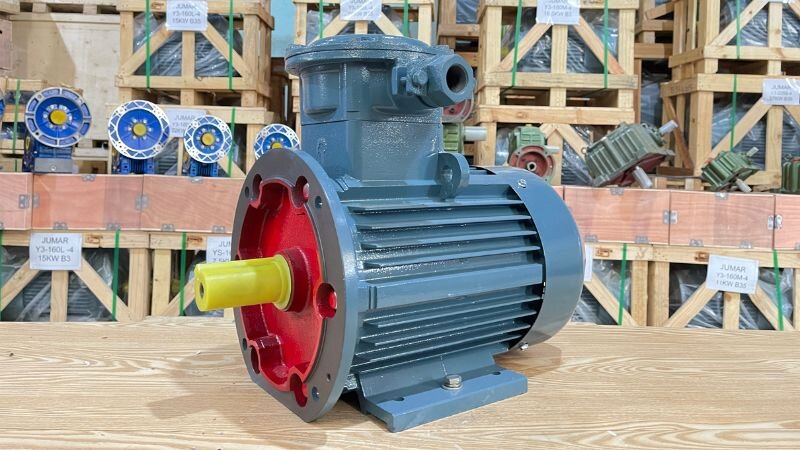
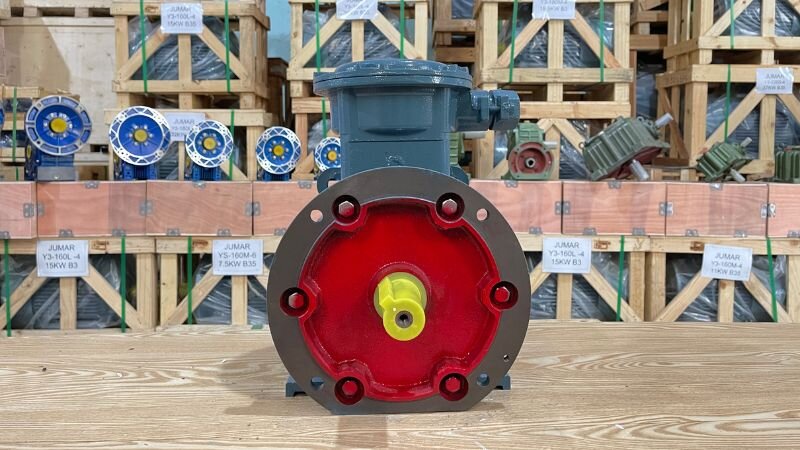
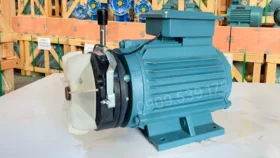
An Explosion-proof electric motor (explosion-proof motor) is a specialized electric motor designed to operate safely in high explosion-risk environments such as chemical plants, gas manufacturing workshops, fuel warehouses, and mines… With a sealed and robust structure, the explosion-proof motor prevents internal electrical sparks or high temperatures from spreading outward, ensuring absolute safety for personnel and equipment. Thanh Thai Motor provides high-quality explosion-proof motor lines that meet international explosion-proof standards.What is an explosion-proof electric motor?
Structure and Design of Explosion-proof Electric Motors
The structure of the explosion-proof motor is the core factor that creates its difference and safety. Compared to a conventional electric motor, its design is much more complex and robust. Let’s learn in detail about the structure of this special electric motor.
Structural Components
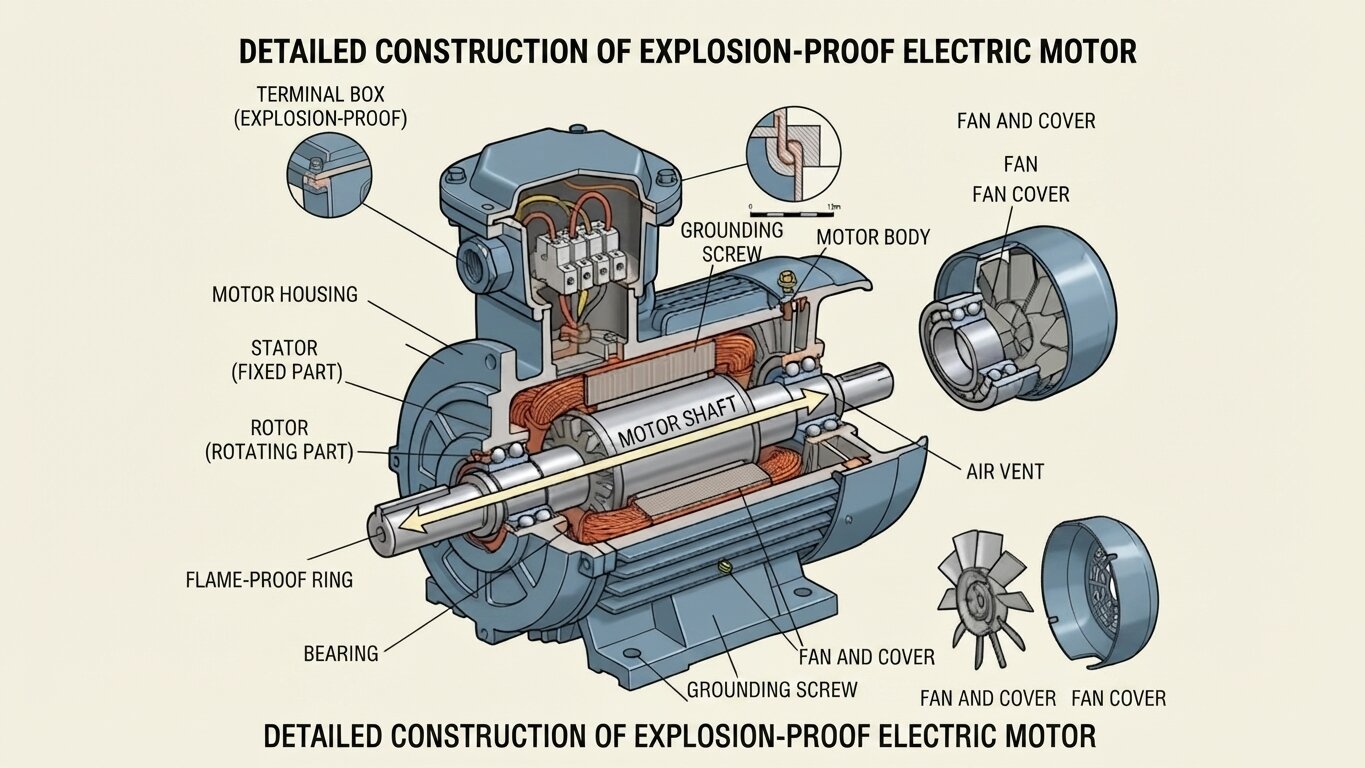
An explosion-proof electric motor includes main parts similar to regular electric motors, but machined with higher precision and premium materials. The main components include:
Motor housing: The housing of the explosion-proof electric motor is made of cast iron or thick steel, capable of withstanding extreme pressure from an internal explosion without being destroyed or deformed.
Terminal box: The terminal box of this electric motor is completely sealed, and cable entries are sealed with specialized cable glands to prevent sparks from escaping.
Shaft and bearings: Manufactured with extremely tight tolerances to minimize friction and heat generation.
Fan and fan cover: Made of anti-static materials such as aluminum or special plastics to avoid friction-induced sparks. The design of this electric motor is optimized for heat dissipation.
Detailed structure of explosion-proof motor
Manufacturing Materials
Materials are the vital factor determining the performance of the explosion-proof electric motor. All details of the electric motor are made of fire-resistant, corrosion-resistant materials with high mechanical durability. Thick cast iron housings, heat- and chemical-resistant rubber gaskets, and high-strength steel bolts ensure that every detail is assembled 100% tightly. This is an important characteristic of high-quality imported electric motor lines.
Safety Design Features
The unique point in the design of the explosion-proof motor is the extended gas escape path principle. The gaps between assembled parts such as flanges and terminal box covers are designed to be extremely small with a zigzag path. If an internal explosion occurs, the hot gas and fire must pass through this long path, and its temperature will drop below the level that can ignite the external environment.
Operating Principle and Outstanding Features
The basic operating principle of the explosion-proof electric motor is still converting electrical energy into mechanical energy like other electric motors. However, the difference lies in the integrated safety protection layers. When learning about explosion-proof electric motors, these superior features cannot be ignored.
Operating Mechanism
When the electric motor operates, it still generates heat and risks internal electrical sparking. The explosion-proof mechanism operates based on two main principles: complete containment and cooling of escaping gas. The thick housing of the electric motor will contain the explosion pressure, while complex gas escape paths will cool any hot gas before it escapes. This is the superior point of this industrial electric motor type.
Protection and Safety Features
Non-sparking housing: Housing and fan materials are selected to avoid generating sparks upon impact.
Surface temperature control: The motor is designed so that the housing surface temperature never exceeds the safety limit, avoiding spontaneous ignition of flammable gases with low ignition temperatures.
Absolute dust and water resistance: With IP66 and IP67 standards, the explosion-proof electric motor can operate in the dustiest and wettest environments.
Classification of Explosion-Proof Motors
Classification by Phase
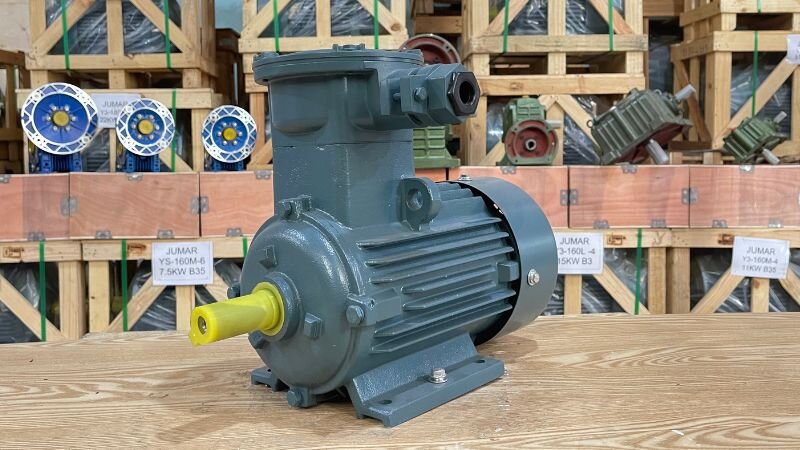
3-Phase Explosion-Proof Motor: The most popular motor line in heavy industry, using a 3-phase power supply (380V), operating powerfully, with high efficiency and long-term durability. Thanh Thai Motor currently only provides 3-phase explosion-proof motor lines, suitable for a variety of drive systems requiring high explosion safety.3-phase explosion-proof motor
Classification by Power Capacity
Explosion-proof motor under 3.7kW: This explosion-proof motor line is suitable for small and medium applications such as pump systems, fans, and chemical mixers in hazardous environments. Advantages are compact size, easy installation, and guaranteed explosion safety standards.
Explosion-proof motor over 3.7kW: This is a group of large-capacity explosion-proof motors, serving heavy industrial equipment such as crushers, large industrial pumps, and fuel production systems… This product has durable operation capabilities and stable performance in harsh working conditions.
Latest Explosion-proof motor price at Thanh Thai Motor
Explosion-proof electric motors not only ensure operating performance but are also a key factor in preventing explosion risks in specific working environments. After understanding the structure, principle, and standards, you surely need a suitable solution for your system. Below is the specific electric motor price table, specifically the latest explosion-proof motor price at Thanh Thai Motor – fully and clearly updated according to each power capacity and usage demand.
Below are the core criteria for you to correctly select a safe motor:
Explosion protection level (Ex Mark): Check the symbols on the motor label to ensure compatibility with the operating environment. For example: Ex d (Flameproof enclosure), Ex e (Increased safety). You need to determine which group your environment belongs to (Group IIA, IIB, or IIC – where IIC is the highest protection level for hydrogen/acetylene gas).
Hazardous area classification (Zone): Determine whether the equipment will operate in Zone 0, Zone 1, or Zone 2. Explosion-proof motors are typically designed for Zone 1 (areas with frequent flammable gases) and Zone 2 (areas with infrequent flammable gases).
Temperature Class: Choose a motor with a temperature code from T1 to T6. This number represents the maximum surface temperature of the motor. For example: Class T4 means the surface temperature does not exceed 135°C, ensuring no spontaneous ignition with gases having low auto-ignition temperatures.
Certification: International certifications such as ATEX or IECEx are mandatory. In Vietnam, products must have explosion safety inspection certificates from competent authorities.
Housing and sealing structure: The motor housing must be cast from thick cast iron, capable of withstanding internal explosion pressure without spreading sparks to the external environment. Cable entry points (Cable Glands) must be specialized explosion-proof types.
IP Protection Class: For explosion-proof motors, the IP rating must typically reach at least IP55 or IP66 to completely prevent dust and water jets, avoiding electrical short circuits inside the windings.
When purchasing an explosion-proof motor, do not just look at the capacity. Ask the supplier to provide complete CO, CQ, and accompanying explosion-proof certificates. In addition, customers can refer to practical review videos on the website in our electric motor video category compilation to closely observe the characteristic thick cast iron housing structure and how to check standard explosion-proof labels correctly.Criteria for purchasing an explosion-proof motor
Frequently Asked Questions
Why is it not allowed to arbitrarily remove the housing bolts of an explosion-proof motor?
Explosion-proof motors operate based on the “Flameproof – Ex d” principle. The gaps between mating surfaces (flanges, technical covers) are precisely calculated so that if an explosion occurs inside, the spark will be extinguished before escaping outside. Arbitrarily removing or tightening incorrectly with non-specialized tools will distort the safety gap, turning the explosion-proof motor into a regular motor, which is extremely dangerous.
How to choose the correct temperature class (T-Class) for an explosion-proof motor?
The temperature class (from T1 to T6) is the maximum surface temperature limit of the motor to prevent spontaneous ignition of surrounding gases/solvents. For example: If you use it in an environment with Acetylene gas (auto-ignition temperature 305ºC), you must choose a T4 class motor (maximum 135ºC) or higher. Never choose a temperature class higher than the auto-ignition temperature of the environment to ensure absolute safety.
What is the difference between ATEX and IECEx explosion-proof certifications?
ATEX is a mandatory standard for equipment used in the European market, while IECEx is a globally popular international standard. In Vietnam, major projects often require both or at least IECEx accompanied by inspection certificates from domestic competent authorities.