


Worm Gear Motors from 1.1kW to 3.7kW are powerful gear motors designed to withstand medium to heavy loads in continuous industrial environments. Featuring a thick and sturdy cast iron housing, this power range offers superior anti-vibration capabilities, efficient heat dissipation under high operating pressure, and long-term mechanical durability.
Worm Geared Motors from 1.1kW to 3.7kW provide large gear ratios and powerful output torque, making them an ideal solution for machinery requiring high thrust while maintaining stability and a compact design. The 1.1kW to 3.7kW power range is a reliable foundation for core production systems.
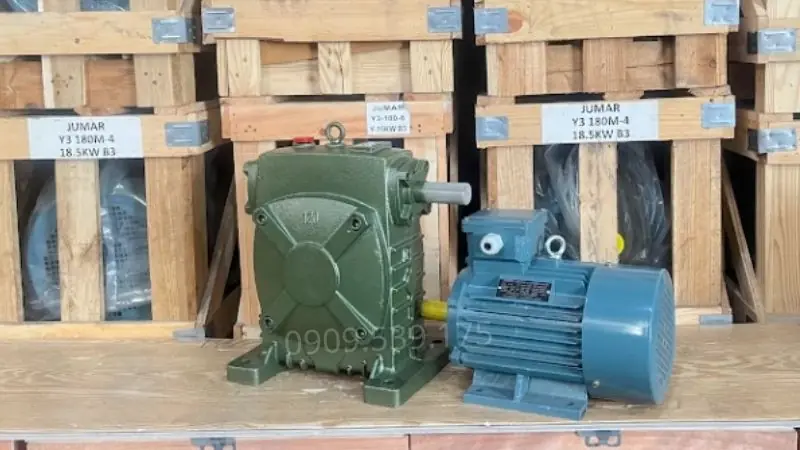
Characteristics of Worm Gear Motors from 1.1kW to 3.7kW
Worm gear motors from 1.1kW to 3.7kW are a popular product group used in transmission systems requiring high torque, smooth operation, and stable speed reduction. This motor line combines an electric motor and a worm gearbox, helping to optimize installation space while meeting various industrial load requirements.
- Popular medium power range: Power from 1.1kW to 3.7kW is suitable for many applications such as conveyors, agitators, packaging machines, lifting equipment, and automated mechanical systems.
- Worm gear structure: The transmission uses a worm meshing mechanism with a worm wheel to help reduce speed effectively, operate smoothly, and limit vibration during working processes.
- Diverse gear ratios: Users can choose various gear ratio stages to meet output speed and torque requirements.
- Self-locking capability in certain gear ratios: Many models feature self-locking characteristics to help limit reverse rotation when the power supply is cut off.
- Compact design: The compact design makes it easy to integrate into systems with limited installation space.
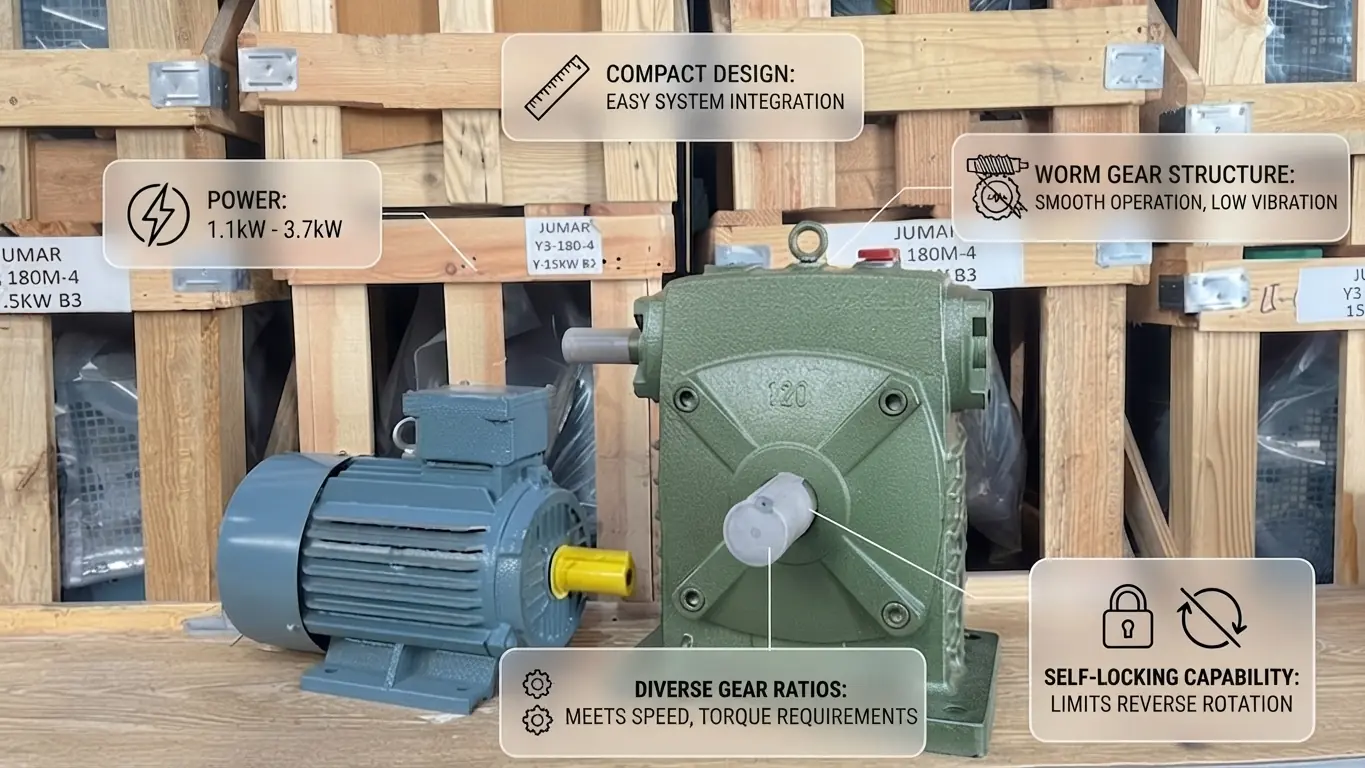
Applications of Worm Gear Motors from 1.1kW to 3.7kW
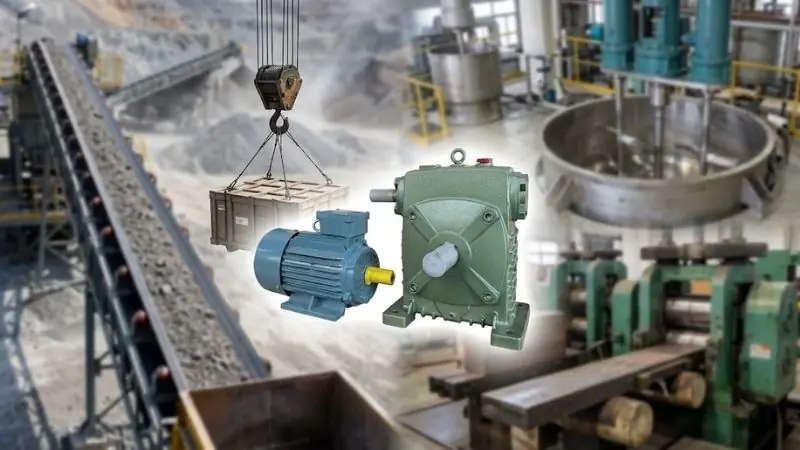
Thanks to their high load capacity and large torque, worm gear motors from 1.1kW to 3.7kW are widely applied in industries demanding durability:
Lifting and Conveyor Systems
Heavy-duty industrial conveyor systems: Provide the necessary traction for long conveyors, inclined conveyors, or heavy material transport conveyors (such as coal, stone, or heavily packaged products) in material production and mining plants.
Large load lifting mechanisms: Applied in winches, small cranes, cargo elevators, or industrial door control systems that require self-locking force and high starting torque.
Production and Processing
Industrial mixers: Operate agitators, raw material mixers, or large-capacity dough kneaders in the chemical, building materials (concrete, mortar), or food processing industries.
Processing machinery: Installed in industrial presses, rolling mills, crushers, or cutting machines, where large power transmission and continuous stability are required.
Worm Gear Motor Prices from 1.1kW to 3.7kW at Thanh Thai Motor
Below is the price list for worm gear motors from 1.1kW to 3.7kW for users to reference and select products that suit their usage needs.
Criteria for Selecting Worm Gear Motors from 1.1kW to 3.7kW
To choose a suitable worm gear motor, users need to consider factors such as load, output speed, and actual operating conditions simultaneously. Determining the correct parameters from the beginning will help the system operate stably, save investment costs, and limit arising incidents during use.
- Determine required torque: Output torque is an important parameter that determines the load pulling capacity of the system. It needs to be calculated based on the load and actual operating characteristics.
- Choose the appropriate gear ratio: The gear ratio directly affects the output speed of the gearbox. The larger the gear ratio, the lower the speed and the higher the torque.
- Check the mounting type: It is necessary to determine the foot-mounted, flange-mounted, or hollow shaft type to ensure compatibility with existing equipment.
- Evaluate the working environment: Temperature, humidity, dust, or chemicals can affect the lifespan of the motor and gearbox.
- Allow for load factor contingency: For applications with frequent starts or shock loads, motors with appropriate backup power and torque should be selected.
Frequently Asked Questions [FAQ]
When should you upgrade from a 1.5kW gear motor to a 2.2kW gear motor?
Users often consider upgrading power when the load increases or the system needs to operate continuously at higher intensity.
Is the performance difference between 1.1kW and 3.7kW motors significant?
Yes. As power increases, the energy transmission and load response capabilities of the motor are also significantly improved, helping equipment work more efficiently in heavy-duty applications.
Is the power range from 1.1kW to 3.7kW suitable for continuous operation?
Many models in this power range are designed to meet continuous duty requirements, provided they are correctly selected according to the load and actual operating conditions.